PAST Logo   Palo Alto Stanford Heritage

About PAST l Centennial Houses l Preservation Awards l  Advocacy  l Inventory l  Holiday House Tour l  Walking Tours l  Resources l  Newsletters l  Contact PAST l  Home l


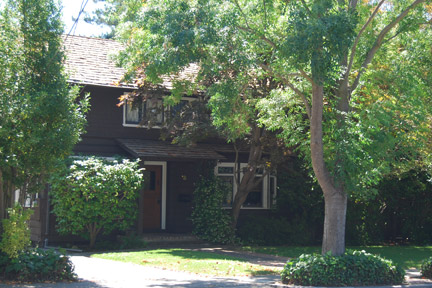
Handsome Residences, Neat Cottages and Notable Trees

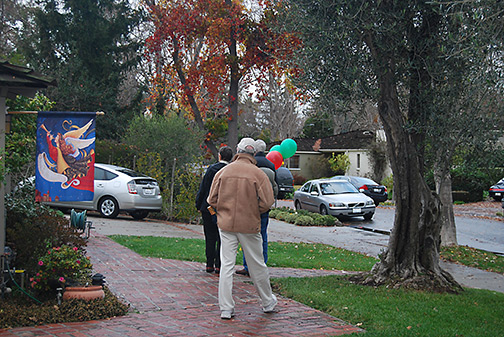
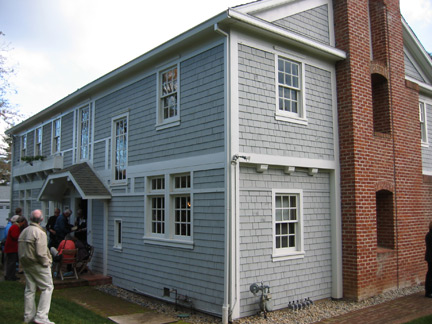
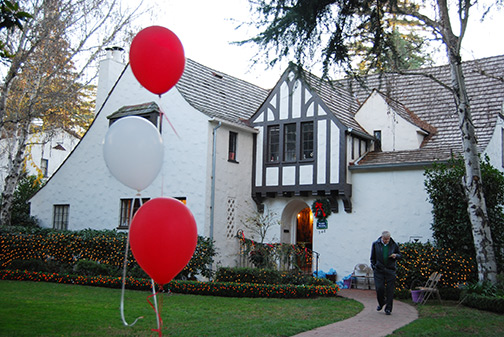
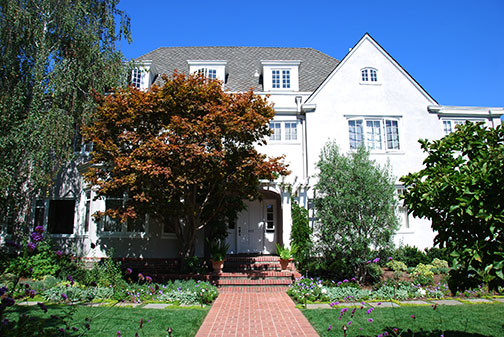
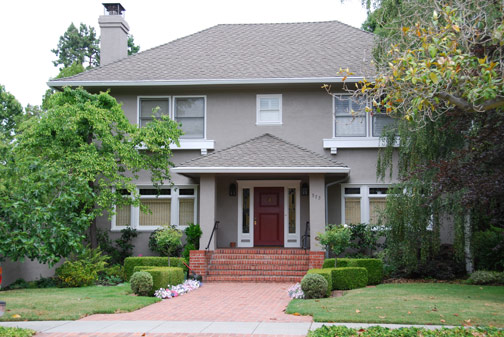
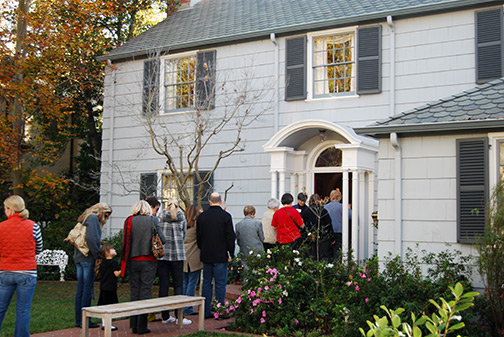
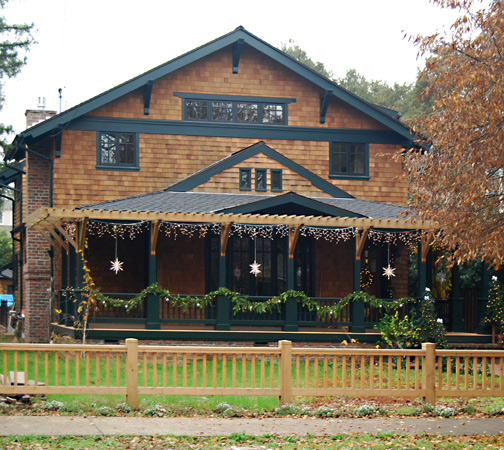
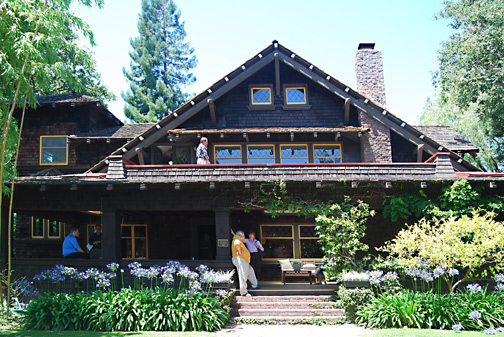
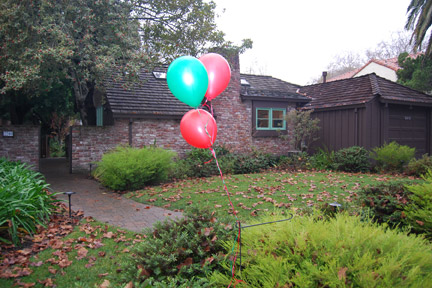
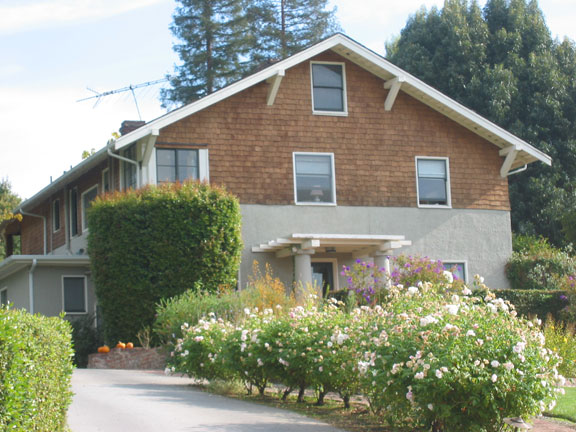
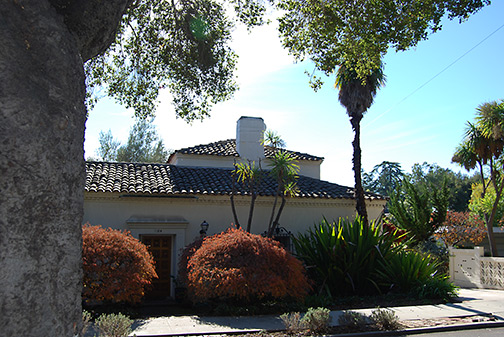
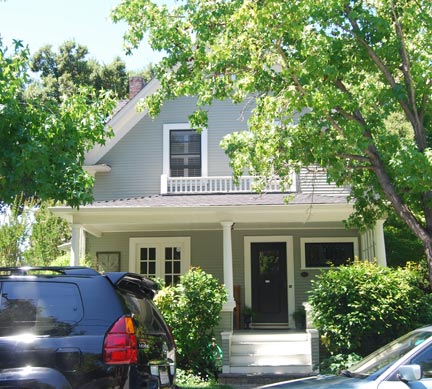
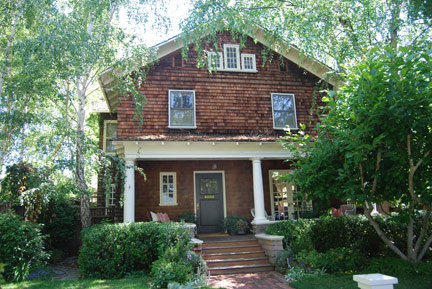
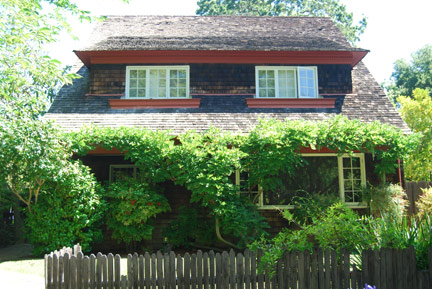
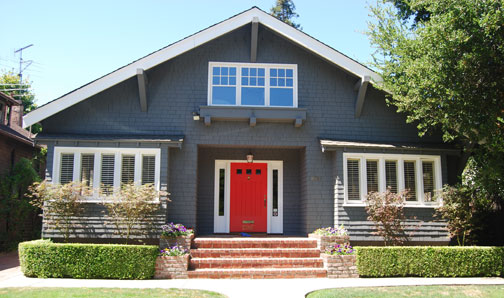
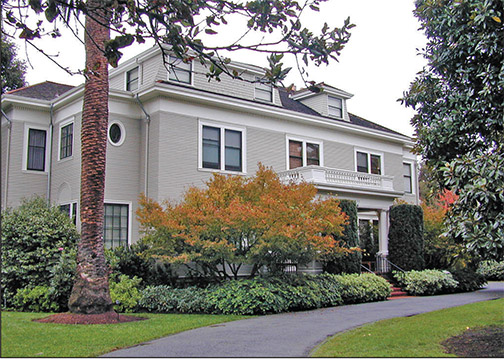
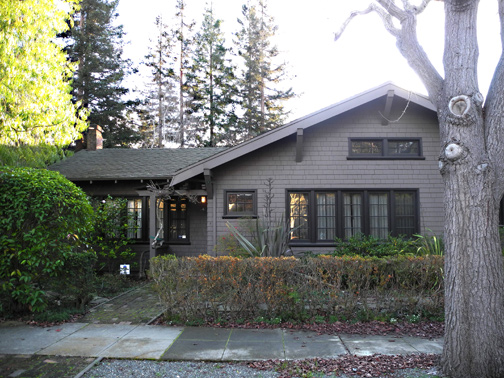
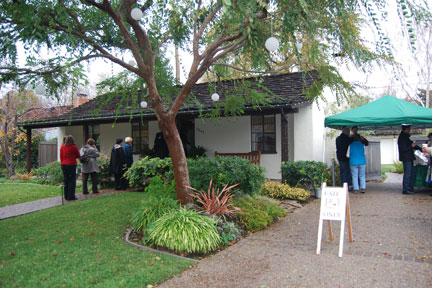
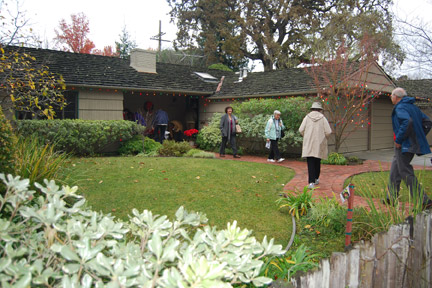
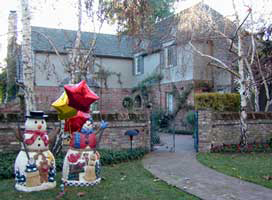
The 24th Holiday House Tour was held Sunday, December 11, 2011 in College Terrace. Check back for more photos of the houses visited.

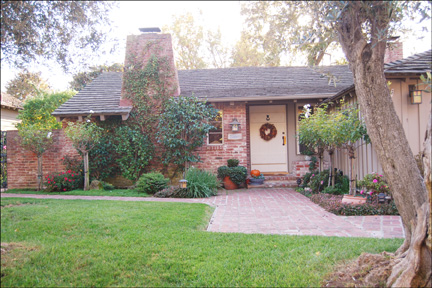
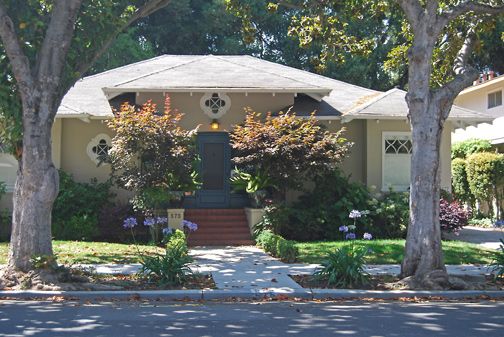
College Terrace is a neighborhood which features a wide variety of architectural styles—from high-style to humble. The atmosphere of the Terrace is that of a small community in which student and professor, grandmother and child, working class and professional, live together and feel closely identified with their environment and with each other.


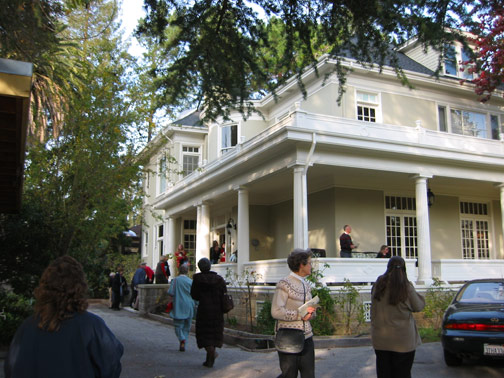
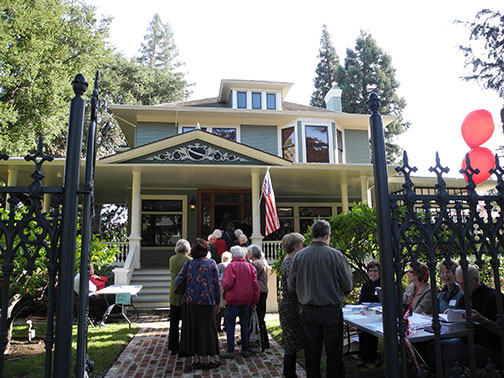
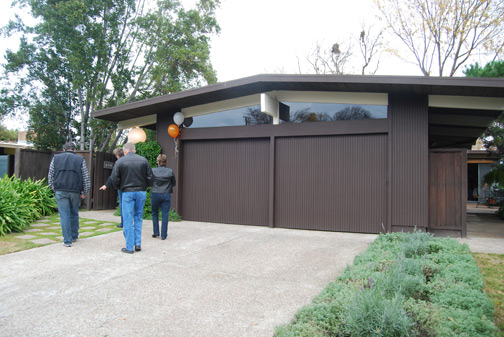
Tour visitors

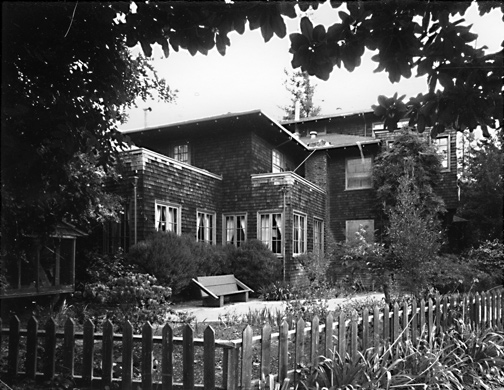
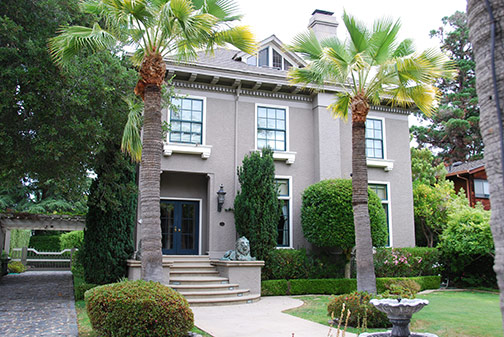
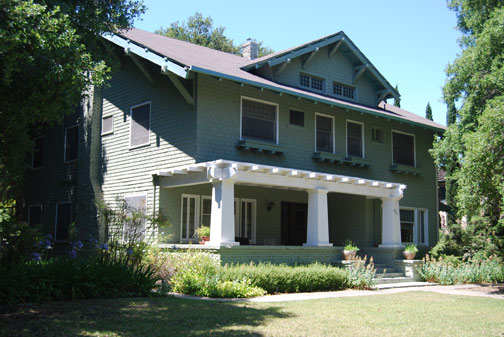
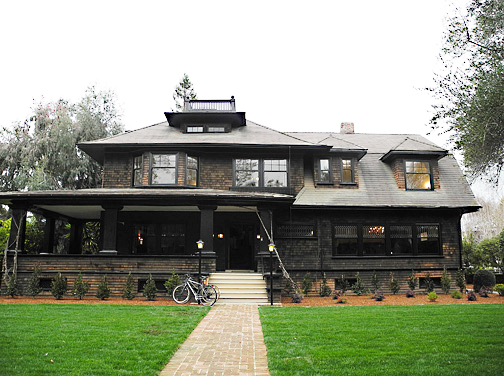
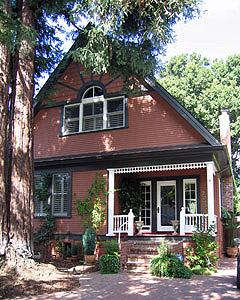
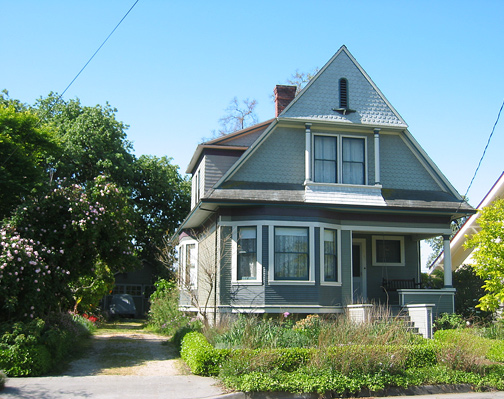
Professorville — Our First National Register District was the site of the 2010 Holiday House Tour.

Read about the homes and see more pictures on the 2010 Holiday House Tour page.


Ashby Addition: 2002

Christmas Tree Lane: 2000

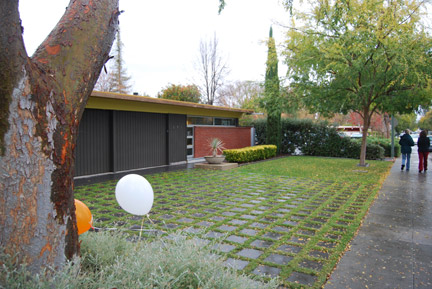
College Terrace: 1997, 2011

Downtown North: 1999

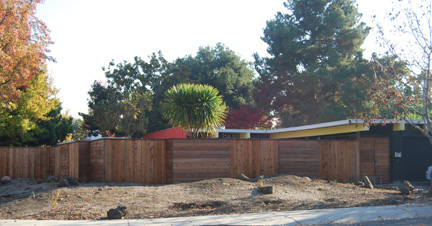
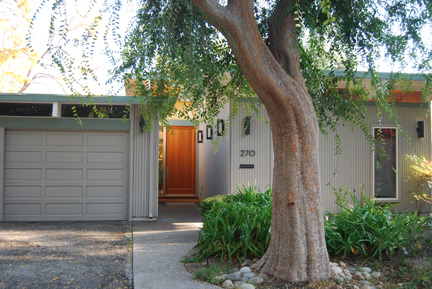
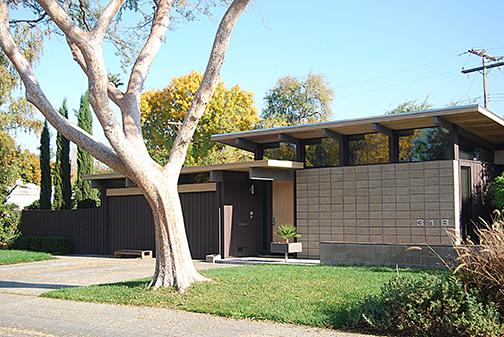
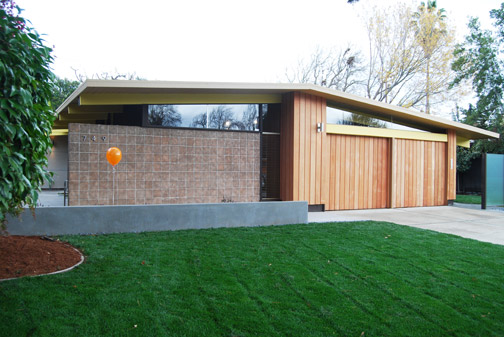
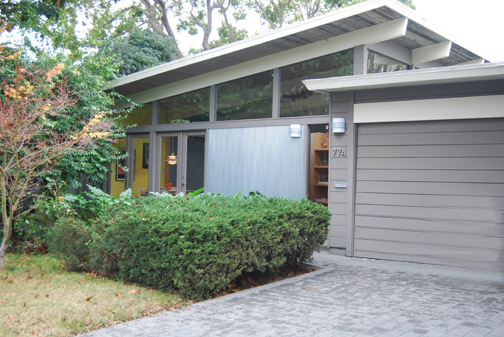
Eichlers: 2008

Professorville: 1988, 1989, 1990, 1991, 1992, 1993, 1994, 1996, 1998, 2001, 2003, 2006, 2010

San Juan Hill: 2004

Seale Addition (Old Palo Alto): 2005

Squire House: 1995

Marcus Stedman: 2009

Charles Sumner: 2007


  1988  l   1989  l   1990  l   1991  l   1992  l   1993  l   1994  l   1995  l   1996  l   1997  l  1998  l   1999  l   2000  l   2001  l   2002  l   2003  l   2004  l   2005  l   2006  l   2007  l   2008  l   2009  l   2010  l   2011  l  


Alphabetical list of all homes.


1988 Holiday House Tour

The first Holiday House Tour was held on
December 18, 1988 and included four homes.


              1988 HHT ticket

The PROPESSORVILLE HISTORIC DISTRICT was placed on the National Register of Historic Places in 1979. Early Stanford University faculty and pioneer Palo Altans built their homes here on land subdivided by Timothy Hopkins for Senator Leland Stanford and opened for development in 1889.

Typical of houses built here were those of the Craftsman style, sheathed in brown shingles with rich wood trim, but eschewing what they felt to be the overly-decorative and superficial Victorian styles. Early examples of the bungalow and the Four-square indigenous styles are also found here.

Professorville today still celebrates the founding of Stanford University and Palo Alto.


1005 Bryant Street — 1893

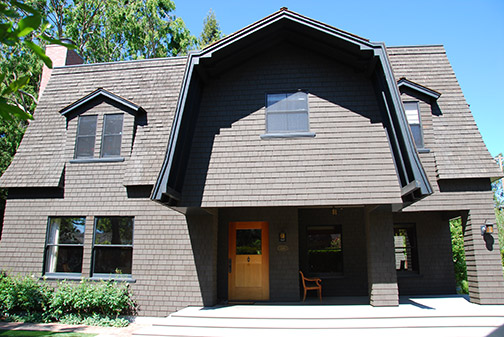
Built for Professor and Mrs. Frank Angell in the Colonial Revival Style with some Queen Anne detailing, the house features a dominant double gambrel roof. Inside, the first floor is panelled in redwood and contains four fireplaces.

Frank Angell was chosen by Stanford President David Starr Jordan in 1892 to head the original Psychology Department. 'Doc' Angell became Stanford's first track coach and Chairman of the Committee on Athletics. In 1933 President Wilbur dedicated Angell Field in his honor.

Louise Angell was an active supporter of educational and cultural activities. She financed the establishment of Castilleja Hall at 1129 Bryant Street in 1901.

        1005 Bryant

This house was also on the 1993 and 2010 Holiday House Tours.


tr>

1121 Emerson Street— 1906 (later identified as 1908)

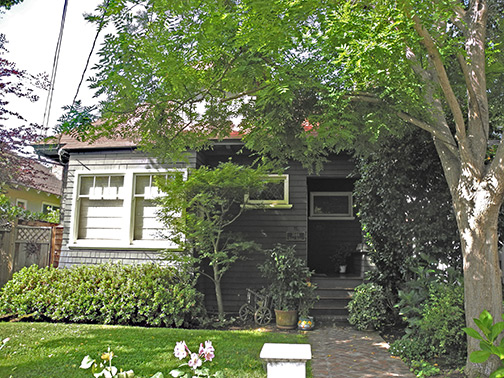
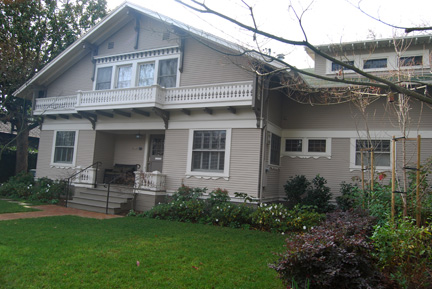
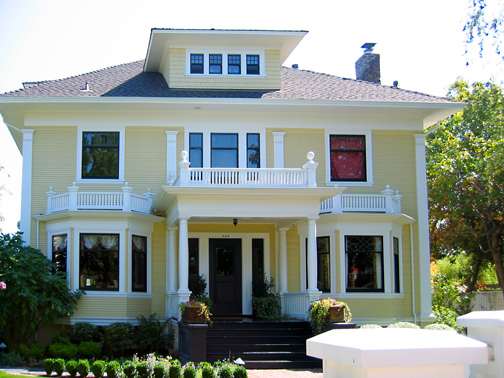
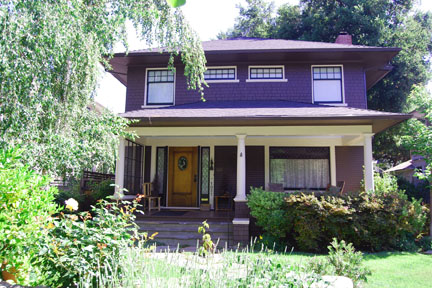
This solid Four-square type house is characterized by its axial design. It is covered in brown shingles and accented by white trim. The square columned entrance porch is surmounted by a second story balcony.

The nicely scaled and balanced fenestration, that is, its windows and doors, complete the overall appealing visual impression.

The interior still contains original panelling and built ins.

The City Directory of 1910 lists D.H. Morrow as the owner. A Dr. Green and his family lived here for a number of years.

(This photos was taken in 2010.)

        1121 Emerson Street


1021 Ramona Street— 1905

Typical of turn of the century small scale housing, this house survives virtually intact in its original appearance. Note that 1029 Ramona is its twin.

The restrained Colonial Revival design features a generous front porch supported by Tuscan columns and an interesting fenestration pattern at the second story. Notice the use of leaded glass panels at the first story.

First occupied by Mrs. E. Melcer and daughter, it was subsequently owned by Mr. and Mrs. Franklin Steinmetz for 41 years. He operated the University Pharmacy in downtown Palo Alto.

(This photos was taken in 2010.)

        1021 Ramona Street

This house was also on the 23rd Holiday House Tour in 2010.


1057 Ramona Street— 1901

The entrance porch of this simple shingled box with a two story high projecting square bay originally ran the entire width of the house.

The deteriorated structure was rehabilitated in 1985 to its original flavor. The rear entry was enlarged, a side entry added, and French doors or windows introduced in compatible style. The interior was opened up and additionally detailed.

Notable occupants of the house over the years included Professor and Mrs. Edward Franklin, he an expert in organic chemistry who joined the Stanford faculty in 1898, and Mr. and Mrs. Charles Ellet, owners of the Stanford Bank and Stanford Realty.

(This photos was taken in 2010.)

        1057 Ramona


As reported in the On the Peninsula column by Kathleen Donnelly in the San Jose Mercury News, Friday morning, December 16, 1988:

Saving, celebrating our historic homes

When Gail Woolley got involved in the historic-preservation movement in 1970, the question was whether old houses would be saved. Now, the question is whether they can be preserved as originally designed, and even celebrated.

The preservation part is still problematic, but the celebration part starts Sunday when PAST Heritage, dedicated to the preservation of historically significant architecture on the Mid-Peninsula, holds a tour of four homes in Palo Alto's Professorville.

The tour is a way of introducing PAST Heritage to the community, says Woolley, a Palo Alto city councilwoman and PAST Heritage organizer. The group, whose name comes from combining Palo Alto and Stanford, was formed in 1987 to plan for the 1988 California Preservation Conference held in Palo Alto. Interest in the committee outlasted the conference.

This spring, the group plans to hold a workshop on restoring older houses and to establish docent-led walking tours, starting with downtown Palo Alto.

But first, they have to get through Sunday's house tour. The featured houses were built in 1893, 1901, 1905 and 1906, as Stanford professors moved into the blocks just south of downtown Palo Alto. Each of the houses will be decorated for the holidays, and refreshments will be served.

Tickets were $25.

Top


1989 Holiday House Tour: Professorville

December 17, 1989

425 Embarcadero Road — 1907

Your host, the Nerrie family have owned this former "student rental" since 1977. Bob, an architect who manages Stanford University Projects, and Elaine, breeder of Soft Coated Wheaton Terriers, have devoted much of the last decade to restoring the main west wing. The east wing unit, now the home of the Connolly family, is also open for the holiday tour.

Built for $6000 in the fall of 1907 for Mrs. Gustavus Ross Alder (Isabella) and her son, Dr. Raymond MacDonald Alder. She and her husband, a retired minister, lived in the larger west wing. Mrs. Alder wrote 125 published novel and children's books under the pen name Pansy. Her son was a member of the original Stanford faculty and Chairman of the English Department. He and his wife, Barbara, and their five children lived in the smaller East wing.

The house was designed by A.W. Smith, an Oakland architect and built by George Mosher a Palo Alto builder. The home is a prototypical Bay Area Shingle Style with its sleeping porches, small balconies, Alpine details and decorative cornice and roof brackets. The interior has fine, dark redwood moldings and paneling.


222 Kingsley Avenue — 1904

This two-story, "Eastern Shingle Cottage" was built in 1904.

The house is typical of many built in the area for Stanford staff. The steeply pitched roof, inviting porch and garden setting remind us of the English countryside. The picket fence replicates one that graced the property until last year when it gave way to gravity. The simple single-story guest cottage on the rear of the property, facing Embarcadero Road, dates back to the 1890's.

At this point, little is known about the original occupants. However, according to the Palo Alto City Directory of 1919, the home was occupied at that time by Mrs. N. M. Thygson and her three children Elling, Philip and "Miss" Ruth. Building records show that the family entered the automobile age in 1924 when the garage was built.

The recent restoration and addition was designed to maintain the character of the original home. The entire rear section including the kitchen and the bedroom above were added this year.


329 Lincoln Avenue — 1899

Robert and Lora Textor have made this wonderful cottage their home since 1968. Bob is Professor of Cultural Anthropology at Stanford; Lora is a counselor and designer. The community owes a great deal to the Textors. In 1969, they initiated, researched and recruited the support which eventually created the "Professorville Historic District." The home was originally the "mother-in-law cottage" for 331 Linclon, home of Wilbur Wilson Thoburn, an important Stanford professor - an early ecologist and campus spiritual leader. Professor Thoburn died unexpectedly in 1899. In 1900 the cottage was moved to its present location and Harriet Woods Thoburn and the children joined her mother in the small cottage.

The former cottage has had at least three major additions including the 1973 addition of its own "electronic" cottage, which serves as the study and office for Professor Textor. The beautifully landscaped front yard, detailing and obvious care of the home continue to make it an important part of the Professorville neighborhood.


1221 Waverley Street — 1902

In 1989, the Dorosin family had lived in this 1902 home for the past 21 years.

The original owners were Perry Roberts, his wife Enola and their son Perry, Jr. According to the City Directory of 1908, Miss Smirthwait visited. In the 1904 City Directory Mr. Roberts is described as a "capitalist." By 1910, he had obviously prospered and describes his profession as "Buildings and Loans."

Architect A. W. Smith designed the home which was built by Gus Laumeister, a local builder responsible for several Professorville homes. Capitalist Perry Roberts paid $5,000 for his new home in 1902.

The shingle home has undergone several major additions. The Folsom .family added a garage in 1921 and expanded the home in 1922. Other major changes were made in 1941 and 1945, probably when the porch was enclosed and the north wing added.

One of the most significant changes was apparently made in the 1920's when the hardwood floor with its intricately detailed border was added. The staircase and unusual banister further accentuate the beauty of the large entrance hallway.


1221 Waverley Street

Top


1990 Holiday House Tour: Professorville

1990 HHT ticket   

Homes on tour:

In the early 1890's, the first houses to emerge from the grain fields of what was to become Palo Alto clustered around the entrances to Stanford University. Merchants and craftsmen favored the University Avenue location where the SP railroad depot was located. Stanford faculty developed a residential area removed from downtown but easily accesible to the campus via Embarcadero. For nearly thirty years the area attracted faculty families, because relatively few homesites were available near the University quadrangles and Stanford land could only be leased, not purchased. The area became known as "Professorville." It is now listed on the National Register as a Historic District.

The Shingle Style, the typical architectural form in the district, emerged about the same time as Professorville. In contrast to the Victorian Queen Anne Style which emphasized structural details, the walls and roof of the Shingle Style enclose the interior space with a continuous skin. Colonial elements are often used, but they are integrated into the overall design by the all-encompassing shingles. The Shingle style also embraces the Craftsman movement in which natural materials and continuity between indoors and out are emphasized. Interior redwood paneling, living and sleeping porches, trellises, and groupings of windows are Craftsman features.

319 Addison Avenue — 1900

The house, with its companion at 327 Addison, was built for Mrs. Kate Schulze in 1900 and 1902 respectively. She first occupied 327 with her sister, Edith Fallanius, but then moved to number 319. It represents one of the principal styles of early Palo Alto, particularly in the central area. Because of the proximity to Professorville, the home has attracted many professors over the years including Professor Horatio Stebbins, the son of a well-known Stanford trustee.

The current owners, Matt Henneberg and Jeannie Moulton, met on the roof of this house. Matt was trying to lay a tarp over the second floor he was in the process of building. A storm was coming and Jeannie, a next door neighbor, offered her help. They were married soon after. Matt and Jeannie have two daughters and continue to remodel when needed, both in their own home and the small rental at the side of the house.

    327 Addison

1061 Bryant Street

1061 Bryant Street — 1899

The "Sunbonnet House" was designed by Bernard Maybeck in 1899 for Miss Emma Kellog. It replaced an earlier Maybeck design which burned down in 1898. The house retains many Maybeck features such as extensive use of redwood shingles (the house seems almost enveloped in them), the use of much redwood inside and out, and Japanese influenced pocket doors. The dominating, large Gambrel roof appears to become one with the walls, presenting a unified mass. This feature is in contrast with the more broken outlines of most Maybeck homes and was thought to be amazingly conventional for Maybeck.

Emma Kellogg was the sister-in-law of Palo Alto's first mayor, Joseph Hutchinson. She lived here with her sister until 1950 and was a much beloved Sunday School teacher for the children of Professorville. She was very hard of hearing and helped found the Better Hearing League in Palo Alto.

George and Sigurd Fiegl have made this their home since 1979 and raised four daughters here. The house has been altered somewhat over the years, the Fiegl's having added their touch by remodeling the kitchen in 1989. Read more.

    1061 Bryant Street


1044 Bryant Street — 1902

The home was originally built for the Varian family in 1902. The father, John, had many literary and philosophical interests and turned the downstairs parlor room into an informal neighborhood school of thought and discussion. The sons, Russell and Sigurd Varian, later collaborated in the development of the klystron tube, the key element of the radar air-defense system of World War II. In 1948 they established the Varian electronics firm. The Varian sons were dedicated outdoorsmen and instrumental in establishing Castle Rock State Park.

This charming cottage has been lovingly remodeled by James and Annie Lin Johnson. It is a wonderful example of how one can renovate an older house to fit today's needs and still retain the historical "feel" of the house. Please note the living room fireplace mantel which was handmade by the present owner. During the remodeling it was determined that what was once a dining room and galley kitchen had been combined at some point and now provides the space for their sunny kitchen. Read more.


1100 Bryant Street — 1902

The home cost Mrs. Cora Bell Kimball $1500 to build in 1902. Take note of the gas/wood burning stove in the kitchen. The railroad lantern hanging in the living room is also original, dating from the 1800's, and was bought by Mrs. Kimball for her son who loved railroads. Dorothy Abbott Ames, the daughter of Nathan Abbott, first Dean of Law at Stanford, returned to Palo Alto after the death of her first husband, son of the Dean of Law at Harvard. She subsequently married her childhood neighbor and friend, Rufus Kimball and lived here with him, in the house his mother built, until the early 1970's. Read more.

Zelma Teicher is the first owner of this Craftsman style cottage outside the original family. She has lived here since 1969 and is delighted that the house remains in its original state and still functions well.


    1100 Bryant


365 Lincoln Avenue — 1903

The house was originally built for Leander Hoskins in 1903 by Gus Laumeister for the princely sum of $8000. Professor Hoskins taught applied mechanics at Stanford until 1925. A subsequent owner installed a beautiful Japanese garden at the rear of the home.

The architecture represents an unusual fusion of Craftsman and Colonial Revival elements. The large, overhanging eaves with projecting rafters are typical of Craftsman style giving the effect of a rustic hunting lodge. The second floor bow window with balustrade adds a more Colonial refinement.

In 1959, Professor James and Margaret Stone bought this magnificent example of a Craftsman home in which they have raised their four children.

    365 Lincoln


Top


1991 Holiday House Tour: Professorville Historic District


Invitation


From the December 11, 1991 Palo Alto Weekly

Always longed for a gorgeous old Professorville home? PAST- Palo Alto Stanford Heritage offers its Fourth Annual Holiday House Tour of five homes in Palo Alto's historic Professorville district on Sat., Dec. 15. From 1 p.m. to 4 p.m., you can travel back in time to 1899, when these homes were built by Stanford University's first professors, who kept elements of the Midwestern and Eastern styles they left behind, while rebelling against the highly decorative Victorian architecture that ruled the day.

The district was placed on the National Register of Historic Places in 1979, and features many Craftsman style homes, typically covered with brown shingles and wood trim. Tickets may be purchased at the first house on the tour, at 345 Lincoln Ave., Palo Alto. While single tickets can be had for $15, a $25 donation entitles new and renewing members of PAST to a pair of tour tickets.


top of ticket          

Homes on tour:


1130 Bryant — 1904

This 1904 chalet is considered a good example of a Craftsman variant design that is rare in Palo Alto. Its first occupant, Professor Karl J. Rendtorff, came to Stanford from Germany in 1893 for graduate study. After receiving his Ph.D., Rendtorff stayed to teach in the German Department until he retired in 1929. Today the house is owned by Alice Erben, a documentary filmmaker, and Robert Steinberg, an architect. The Steinbergs have made three remodels to their home in 12 years. Remodeling included custom details to the trim, siding and windows to reflect the character of the period during which the house was built. Read more.

        1130 Bryant


1129 Emerson — 1908

This shingled Craftsman house is a fine example of the builder's bungalow, performing an important role in the visual background of its block. The house was commissioned by Mrs. W.H. Fowler who lived nearby at 221 Kingsley. It was built by Gustav Laumeister. Colonel Jacob Kreps occupied the house from 1913 to 1918. From 1923 to 1937, the Egerton Lakin family owned the house. Lakin served on the City Council and presided over the Chamber of Commerce and the Masonic Lodge, played leading roles in the Community Players' productions, and attended every Big Game at Stanford from 1902 to 1967. From 1938 to 1952, the house was owned by Professor Philip Buck, a distinguished specialist in comparative government.

The present (1991) owners are Karen and Larry Holman who have lived in the house since 1986. The Holmans have done extensive renovation to their shingled Craftsman.

        1129 Emerson


433 Kingsley — 1892

1892 This shingled house was built for Joseph and Katherine Kellogg Hutchinson and is considered an exceptionally elegant fusion of 19th century forms and motifs. A remodel done in 1903 was the work of builder Gustav Laumeister. A single palm tree stands in the front yard today where a palm-lined drive once circled past the entrance. Jospeh Hutchinson was the first president of the Palo Alto Improvement Club, organized in 1892. From its efforts came plank sidewalks, gravel streets, schools, water works, electricity, a street railway, and eventually, town incorporation. Between 1935 and 1949 the house belonged to Michael and Sarah Stein. Stein's sister Gertrude visited him when she came to lecture at Stanford in 1935.

Extensive interior redecoration took place in 1984 when the house served as a Designers' Showcase. That same year, Janet Da Foe and Ronald Davis purchased the house and, in the years since, have opened it many times for charitable events. Ms. Da Foe has interviewed acquaintances of the Steins and learned that the couple often gave away Picasso sketches to their guests. Marc Chagall was once a guest in the house.

        433 Kingsley in 2010


345 Lincoln — 1893

The home at 345 Lincoln Avenue is a Colonial Revival structure designed by Professor A.B. Clark, father of Birge Clark, and built in 1893 by George Mosher for Charles Benjamin Wing, a professor of civil engineering at Stanford from 1892 to 1945. A tall tank house (now attached) once stood over a cooperative well shared by the "Big Four" professors, Angell, C.D. Marx, Murray and Wing, as well as neighbor W.W. Thoburn. Professor Wing was Mayor of Palo Alto when President Theodore Roosevelt attended a rally on the Plaza.

Harlan and Jeannette Remmel purchased the house in 1954. Mrs. Remmel's father had been an acquaintance of the Wings and helped the professor with various engineering experiments. As a child, Mrs. Remmel passed the Wing house on her way to Addison school. Like the Wings, the Remmels raised six children in the house.

Note: The house was sold in 2009 and is currently in the final stages of restoration.

    345 Lincoln before restoration


1432 Webster — 1914

Be sure not to miss this shingled bungalow with its shallow gables and cluster windows. It is well worthh the added walk to see what is considered such a fine example of the Craftsman style. The house was built for Dr. Jerome and Mrs. Mary Denison Thomas. Mrs. Thomas was elected to the City Council- the first woman to hold that office-- and was influential in the city's purchase of the marshland property on the Bay. Dr. Thomas was an optometrist who served as a medical officer in the Philippines.

The Thomas house was purchased in 1978 by Linda and Jerry Diamond. The Diamonds recently remodeled the kitchen in keeping with the classic Crafstman bungalow style. The interior of the house features built-in window seats and bookcases and a fireplace hood made of pierced metal.


Top


1992 Holiday House Tour: Professorville


The 5th Annual Holiday House Tour was held on December 13, 1992 and featured five Professorville homes. The homes represented early 20th century styles favored by Stanford professors. Styles included were the Shingle Style, Colonial Revival, Georgian/Colonial Revival and California Mission revival. On a historical note, one was the home of the author of the Stanford Hymn.

         
1992 ticket          

Homes on tour:


1055 Cowper Street — 1910

This superb example of Mission Revival architecture was built in 1910. It is one of the finest and earliest examples of this style in Palo Alto. The house was originally built for Margaret Detels. The builder is thought to be George W. Mosher who built several homes in Professorville. Judge Jackson H. Ralston, an internationally renowned lawyer, was a long-time owner. Major remodeling was done to the front of the house when the open porch was enclosed.

Bill and Susan Beall both grew up on the East Coast and were familiar with older style homes. However, the uniqueness of the Mission Revival style house on Cowper Street so attracted them that they purchased the house in 1975. The Bealls have remodeled the front porch again as well as the kitchen.

          1055 Cowper


334 Kingsley — 1903

Here is a fine example of formal, symmetrical Georgian/Colonial Revival stylearchitecture. It has considerable presence and dignity. The builder was George W.Mosher, a well known builder in Professorville. The home was built for a young physiology professor, James Rollin Slonaker. The president of Stanford, David Starr Jordan, invited Professor Slonaker to leave the University of Chicago and join the Stanford faculty. The house remained in the Slonaker family until 1964.

The Fife family purchased the home in 1978. They are only the third family to live in this house. All the wood paneling is original. The bookcases in the back parlor were added by the Fifes. The sunporch in the rear of the house has been remodeled as well as the kitchen.

          334 Kingsley

1103 Ramona Street — 1902

"Seale Cottage" was the name the neighbors called this charming, two-story redwood shingle house. Alfred Seale brought his bride to live here in 1902. Alfred's uncles, Thomas and Henry Seale, sold Timothy Hopkins most of the land for the original townsite of Palo Alto. Gustav Laumeister, a well-known builder in the town, built the house.

There is a unique hearth tucked under the stairs. The living room and dining room have the original redwood paneling.

Mr. and Mrs. Howard Gopen purchased the house in 1978. They have recently remodeled the kitchen and done extensive remodeling of the landscaping. The front porch was enclosed in the 1920s and a gravity furnace installed which still heats the house.

          1103 Ramona Street

1106 Ramona Street — 1904

When Samuel and Isobel Charles married at the beginning of the twentieth century, they asked their next door neighbor, Andrew Browne, assistant professor of mechanical engineering at Stanford, to design a house for the newlyweds. The builder was Albert Cook.

The kitchen was remodeled in the 1960s. This unusual kitchen remodel was done by the owners' son as part of an apprentice course in architecture.

Susan and Bob Wolfe purchased the house in 1987. During remodeling, the Wolfes discovered the original fireplace in the living room that had been covered up by a wall. When the Wolfes bought the house, the front of the house was one huge room. They have now divided this space into a living room, dining room and foyer/hall. The columns were added at this time.

          1106 Ramona

1146 Waverley Street — 1893

This two-story house has an unusual half-timber pattern facade on the gable. The squared-shaped bay is also a striking architectural feature.

The house was designed by Charles Hodges, a Stanford architect who was one of the designers of the Holland tunnel and the George Washington Bridge in New York City. Field and Ledyard were the builders.

The house was built for Professor Albert W. Smith and his wife, Professor Mary Roberts Smith, both of Stanford. He was chairman of the mechanical engineering department and she was associate professor of social sciences and sociology. Together they wrote the Stanford hymn, Hail, Stanford, Hail.

In 1926, Edwin and Patricia Sherwood, grand-daughter of Professor Charles Marx, bought the house and it has remained in their family until now. The house is currently for sale.

          1146 Waverley Street


Top


1993 Holiday House Tour: Professorville


1993 ticket      

Homes on tour:


1005 Bryant — 1893

This three-story Craftsman shingled house has an unusual pattern of tall, thin indentations in the facade of the brick-work chimney. The first floor interior is paneled in redwood and has four hearths. It is said to be the first house in Palo Alto which was designed by an architect. It was built for Professor Frank Angell, who came to Stanford as head of the Psychology Department. He was Stanford's first track coach, and Angell Field, Stanford's track oval, was dedicated to him. His wife Louise was an active supporter of educational and cultural affairs who financed the establishment of Castilleja Hall at 1129 Bryant Street in 1901.

          1005 Bryant


1057 Ramona Street — 1901

This simple shingled box is decorated by a wider bank of shingles at the second floor and a Tuscan porch. The side of the house has a projecting square bay, two stories in height, supported at both stories by round-ended short corbels. In 1985 it was wholly rehabilitated and relandscaped by its present owners. Its early years found this house primarily the home of successive Stanford professors. In 1924 it became the home of Charles and Martha Ellet, who owned it for 50 years. Ellet's father had bought the Mayfield Bank and Trust after he came to the city in 1908. Ellet opened the Stanford Realty Company the same year in which he acquired this house.

          1057 Ramona Street


221 Kingsley Avenue — 1902

"Fowler Mansion" sits as an "anchor" house of the Professorville district. This large shingled Craftsman house presents a massive composition of sculptured roof and dormer shapes. Capped by a widow's walk, it sits on expansive grounds.

It was built by Gustav Laumeister for Mrs. Joshua Fowler, widow of a Spanish American War officer. Mrs. Fowler had come to the community in 1900 so that her son, Frederick, could attend Stanford. When Frederick married Else Branner, daughter of Stanford's second president, John Branner, they came here to live. From 1938-1974, the house was the residence of Professor Karl Brandt, a distinguished agricultural economist with the Carnegie Food Research Institute at Stanford.

          221 Kingsley


262 Kingsley Avenue — 1908

A row of diamond-paned windows enhance the shingled second floor of this lovely home.

Samuel Swayze Seward, Jr. was the original owner and resident of this house, returning here after his marriage to Amy Holman in 1919. Samuel had come to Stanford in 1900 as a member of the English faculty, leaving during WWI to help in the war effort. For his service, he received the Chevalier of the Legion of Honor, Croix de Guerre, Medal of King Albert of Belgium, plus two citations for bravery under fire. According to the present owner, neighbors call this house the "Hoover House" because Lou Henry Hoover was supposed to have lived here for a short while before Hoover House on the Stanford campus was built.

          262 Kingsley in 2010


364 Kingsley — 1899

This small shingled hip-roofed house with suggestions of Craftsman origins shares a charming landscaped garden with its neighbor, 374 Kingsley. Eclectic arrangements of window styles offset the rustic wood interior of the original portion of the house.

Miss Eleanor Pearson had J.W. Wells build this cottage for her next door to Lucy Fletcher Brown, her fellow co-founder of Castilleja Hall. Dr. George B. Little, Palo Alto's first resident dentist, and his wife lived here from 1903-1911. In 1929, Professor Wilfred H. Manwaring, Stanford School of Medicine's outstanding bacteriologist and immunologist, purchased the cottage. The Manwarings sold it to the present [1993] owners in 1960.

          364 Kingsley


Top


1994 Holiday House Tour: Professorville


1994 ticket          

Homes on tour:


944 Bryant Street — 1905

This house was originally built as a photographer's studio for Alice Kelly who lived next door at 940 Bryant with her mother. Alice had been appointed deputy postmaster after arriving in Palo Alto in 1892. On September 1, 1906, Alice and Maude Jay Wilson opened a "Bungalo Photographic Studio" here. The present kitchen was originally the dark room. The tree in the back yard is reputed to be one of the oldest in the area, approximately 400 years old.

       944 Bryant  


918 Cowper — 1895

A remodeling of this house replaced the original siding with stucco. Nina Parkinson, a prominent member of the Women's Club of Palo Alto and the widow of Dr. Benoni Parkinson, the co-founder and president of the Bank of Palo Alto, lived here in the early 1900s. Later residents, Robert Henry and Nettie Harcourt, made this their family home from 1927-1940 during which time he was a teaching specialist in forge practice at Stanford.


1336 Cowper Street — 1925

"Pettigrew House"

George Washington Smith, one of the foremost architects of the Spanish Colonial Revival style, designed this house for Perce L. and Laura Pettigrew.

L-shaped with a red tile roof, it follows the Spanish tradition of a private shelter from the public. The home's limited exposure to the street contrasts with the opening of numerous sets of French windows to a garden in the rear. The Pettigrews enjoyed this home from 1925-1970.


235 Embarcadero — 1906

"The house was built before, during, and after the earthquake," according to J(ohn) Pearce Mitchell who had Gustav Laumeister build this shingle-style house for him and his new wife, Helen. Then, every time a child arrived (four of them), he enlarged the house. Mitchell, professor of chemistry at Stanford, lived in this house until his death in 1974. He also served on the Palo Alto City Council from 1930-1961, including serving as mayor from 1951-1953. Across the backyard is the house built by his mother, Lydia Pearce Mitchell, at 252 Kingsley.


601 Melville Avenue — 1905

This shingle-sided Craftsman-style home is noted for its combination of triple gables, gambrel-roofed wing, and front side tower. It was built by Gustav Laumeister for Theophilus and Ila Land Allen. Soon after its completion, it was "considered by many to be the most attractive home in Palo Alto." The house interior contains built-in furniture, unusually copious storage space, redwood paneling and beams, as well as a cantilevered stairway in the entry hall. A separate apartment on the ground floor, entered at 1261 Webster, was originally occupied by Mrs. Allen's parents.

          601 Melville


Top


1995 Holiday House Tour

1995 ticket          

Homes on tour:


1145 Forest Avenue—1889

"The Ashby House"

This simple Victorian cottage with finely detailed Eastlake window facings was originally located at 1033-1035 Forest, on the side of the Forest Avenue "island." It was moved to its present site around 1910. The property was purchased by Delmar and Ella Ashby in 1890 who hoped to build a cannery on it. Financial reverses forced the Ashbys to subdivide the land which was annexed to Palo Alto in 1919 and known as the Ashby Addition. Other owners/occupants include James Cooley, river boat captain; W. L. Cooley, master mariner; and Mildred and Daniel Mendelowitz, artist and Stanford Professor.

          1145 Forest Avenue


567 Hale —1904

"The Tobey House"

This Classical Revival house was built at 1001 Hamilton Avenue for Walter Danforth and Mary Lincoln Tobey (of Box 193: The Tobey Letters, in the Palo Alto Historical Association). The architect of the house, William Danforth Bliss, was nephew to Mr. Tobey. Because of a lot subdivision in 1966, the originai side entrance on Hale became the front entry. The present owners (1995) added new front steps and lions on pedestals. The interior has much varied wood due to Mr. Tobey's Nevada lumber business fortune. Examples are the redwood in the reception hall and the white cypress trim in the living room. The upstairs servants' quarters and family rooms show an interesting contrast.

          567 Hale, taken in 2011


951 Hamilton Avenue—1908

Craftsman details enhance this shingled house, one of several houses built in Palo Alto by local contractors Pittman and Upham. Charles T. Morrison, president and manager of Morrison Lumber Company, his wife Caroline B. Morrison, and his widowed mother Mary E. Morrison were the original occupants of the house. The interior of the house has identically-patterned leaded glass in the front hall sidelights, the dining room cupboard, and the living room bookcases. The present owner (1995) made the matching leaded glass in the rear hall door. Cofferred ceilings add an interesting detail to the downstairs rooms.

          951 Hamilton, photo taken 2009


38 Hamilton Court—1959

Architect William Wurster built this home for the widow Nellie Swall Wright, the third home he had been commissioned to build for the Wright family. The house was designed to retain the wisteria and arbor on land which was originally the garden of a house on Chaucer. The low ceiling entry leads into a spacious wood-paneled living room with a ten-foot ceiling. A typical Wurster design, this deceptively simply house has an enclosed courtyard and living quarters with pleasing proportion and scale. An exhibit, "An Everyday Modernism: The Houses of William Wurster," was currently showing at the San Francisco Museum of Modem Art.


Photo not available at this time.


900 University Avenue —1904

"The Squire House"

Built by George W. Mosher at a cost of approximately $18,000, this formal Classici Revival house was designed by San Francisco architect T. Paterson Ross. Its California Historical Landmark No. 857 designation was celebrated on January 27, 1973 as part of a successful effort to rescue this house from demolition. Public interest in historic preservation kindled in this rescue campaign led to the city's 1979 Preservation Ordinance. The present owners (1995) have lovingly and expertly restored the home, after years of previous owners' "updating." The house was built for John Adams Squire and his wife Georgiana—the second home they built in Palo Alto. The Squires had moved to University Park (as the town was then known) from San Jose when he enrolled at Stanford in 1891. When their three daughters were young, and then later students at Stanford, the house was a buzz of social activity.

          900 University Avenue


1996 Holiday House Tour: Professorville


705 Cowper Street, 505 Embarcadero Road, 331 Lincoln Avenue, 821 Waverley Street, 1022 Waverley Street


The following article, edited by Bjorn Sunde appeared in the Friday, November 29, 1996 Palo Alto Weekly. Photographs were added for this web page.

A Walk Through History

Have you ever stopped to admire one of those old, beautiful homes in Professorville and want nothing more than a quick look inside? If so, you'll get your chance next weekend when a local organization embarks on its annual tour of historic homes.

The Holiday House Tour, hosted by PAST (Palo Alto-Stanford Heritage) on Sunday, Dec. 8, will highlight five landmark Palo Alto houses and their places in the history of the city.

Each December for the past eight years, PAST has sponsored a tour of five homes to "give the community a chance to see inside historic Palo Alto homes," said tour organizer Sue Krumbein, a member of PAST for the last five years.

Each year different homes are selected for the tour, which usually takes place in and around the historic area of Professorville, Members of PAST submit the addresses of homes they believe would be appropriate for the tour, and the owners are approached to see if they would be willing to participate.

Some of the owners are already members of the group or friends of members, so recruitment in those cases is easy. More often, however, the owners must be approached cold and asked to participate. Not everyone who is approached agrees readily. As Krumbein said, "Not everyone is eager to have 200 strangers tramp through their living room on a Sunday afternoon." Those who do participate have a deep and abiding respect for the history that their homes possess and wish to share it with others who have a similar appreciation of architectural history. The houses that are chosen must possess not only a rich heritage but the integrity of the original design.

The five homes featured this year are 331 Lincoln Ave., 705 Cowper St., 1022 and 821 Waverley St., and 505 Embarcadero Road.


The home on Lincoln Avenue was originally built in 1893 for the Thobum family at a cost of $2,300 by the contractors Sheldon and Mosher. The tank house that is now incorporated into the house next door was originally cooperatively owned by the Thoburns and three other families. This joint venture to share a large water tank is credited by some as being the start of civic utilities in Palo Alto.

The house itself is a simple Victorian in style, according to PAST's guide to the homes. It is two stories, with a basement and an attic. The current owners began a restoration project on the structure last March, after years of neglect by previous owners. The property also includes a cottage that was built for the owners in 1920.

          331 Lincoln


The home on Cowper Street was the center of a racial debate in the 1920s when a group of Palo Alto citizens petitioned the city to create "a segregated district for the Oriental and colored people of the city." Dr. Effie York owned 705 Cowper at the time, and used the house and her property next door at 711 Cowper as a club and residence for Filipino students at Stanford. Dr. York led the fight against the segregationists and convinced the Planning Commission to reject the petition.

The house itself remains similar to its original condition. The present owners bought it in 1986 and refurbished it as an inn. The only major structural change was the installation of a reception desk where a coat closet in the entrance hall once was.


The home at 1022 Waverley St. was built in 1902 by Gus Laumeister for Mrs. Emma Pleasants at a cost of $2,800. Laumeister was a major builder in Palo Alto around the turn of the century. He built many houses in the Professorville area. The present owners, Sallie and Michael Havern, bought the house last year. The Haverns have remodeled. The kitchen and dining room have been completely rebuilt, and the existing front porch was not a part of the original structure. The Haverns have done some renovation and restoration and plan to do more in the future.

          1022 Waverley


The home at 821 Waverley St. is an altered Queen Anne cottage that was originally built about 1899. The construction demonstrates the use of mill-work that was popular in this period, according to PAST. The first known resident was a Miss Bertha Slade. By the late 1960s, the house had begun to deteriorate, and the original garage was lost to fire. The house was bought by the Fitton family in 1978, and they began to restore it to its original shape.

The home at 505 Embarcadero was built in 1907 for the Dibble family. The house cost about $3,000 to build. It is listed on the city's Historic Inventory sheet as a Colonial Revival in form. The house is shingled and has a large veranda with gabled dormers.

The house was apparently in good condition when the present owners bought it. A little touch-up work on the roof and sides was all it took to restore the house to excellent condition.

Next Sunday's tour includes information on the histories of the families that have lived in each of the houses since they were built, focusing on all of the original owners. The depth of the information is impressive, and it provides interesting background when viewing the houses.

PAST was founded about 10 years ago by local preservationists who had been involved in an architectural preservation workshop. The group established its house tours to give Palo Alto residents a sense of the history behind the city.

At the time of the group's founding, no Palo Alto organizations were working to preserve the houses from demolition. The Palo Alto Historical Association was preserving the city's housing records, but according to Krumbein, PAST's founding members believed that "it wasn't enough to simply have records of the houses; they had to make sure that the houses themselves remained."

Tickets for the house tour cost $20. Proceeds go toward historic preservation efforts in the city.

p  


Top


1997 Holiday House Tour: College Terrace

1997 ticket          

Homes on tour:

          1997 Ad


The following appeared in theOctober 1997 PAST News:

Tenth Annual Holiday House Tour This Year in College Terrace

Don't miss the extraordinary opportunity to see five houses in a neighborhood which PAST Heritage is featuring for the first time on its Holiday House Tour.

College Terrace is a neighborhood which contains a wide variety of architectural styles and features—from funky to aristocratic. The Terrace is a e where Stanford students and faculty live next door to each other, where working class and professional people share a neighborruxxl known for its friendliness.

College Terrace was originally a portion of Mayfield, the town located immediately to the south of the Stanford campus, and some of its houses are even older than those in Professorville.

Five houses will be open on Sunday, December 14, 1997 from 1:00-5:00 pm for the PAST Heritage Tenth Annual Holiday House Tour. Each of the five is an outstanding example of College Terrace at its best.

Among them is an 1898 Queen Anne with a myriad of details, including a rectangular tower at an angle on one corner, a pyramid roof, a main gable with window eyes, a false gable with medallions, a porch with spool work, and scalloped shingles.

A second house, built in 1904 by English stonemason Joseph Birkett, is an Eastern Shingle Cottage and shows its Colonial Revival heritage in the details added to the upper story.

A third house, also built in 1904— this one built by a Stanford student— is a two-story Shingle style and stands at one of the highest points of the Terrace.

The oldest house on the tour, built in 1889, is a simple but elegant Stick style Victorian facing what was once Cambridge Avenue when that street bisected College Terrace from Yale to Amherst.

In 1927, architect Charles Sumner designed the fifth house on the tour, an imposing Colonial Revival, for Ruth Woodyatt and her children. It is a classical design with a detailed portico.

2275 Amherst Street — 1893

Stanford University opened in 1891. Two years later this Queen Anne style house was built for Latin professor Walter Miller, a member of Stanford's original faculty. The house faces what was Cambridge Avenue when that street ran from El Camino to Amherst. The front of the house includes several gables. The main one has window eyes. A false gable has medallions, and the gable over the porch has concave medallions and an acorn pendant. The house has many other embellishments as well. The present owners have kept the original floor plan, and have refurbished, and where necessary, restored the extensive detailing on the house.

          2275 Amherst


2230 Amherst Street — 1904

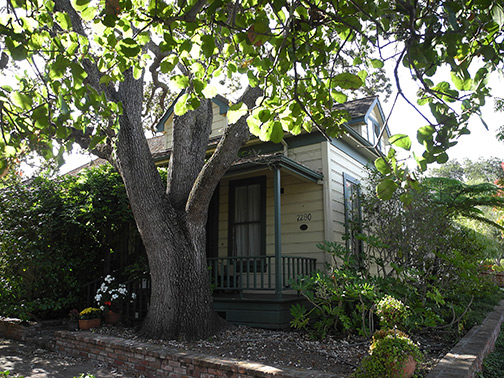
College Terrace, or Palo Alto as it was called until the name was officially changed in 1891, has always included Stanford professors and students amongst its population. This shingle house with its Craftsman details has, on occasion, housed Stanford students and is reported to have been built by one. The builder planted a redwood tree, two cedars and a Monterey pine which still stand on the property. They create a charming wooded setting for the house. The wing to the right has been expanded slightly to increase the size of the living room and to add an upstairs den.


1425 Stanford Avenue — 1927

In 1925 College Terrace, as part of Mayfield, was incorporated into the city of Palo Alto. Two years later the architect Charles K. Sumner designed this Colonial Revival house for Mrs. Ruth C. Woodyatt, the proprietor of The Flower Shop in Palo Alto. The cottage at the rear of the property was built several years later for Mrs. Woodyatfs sister. Only three families have owned this house. They have preserved its original design and have maintained the many classical details which characterize the house. The maze in the front garden was added by the present owner.

The kitchen has been remodeled but within its original walls. The wall between the butler's pantry and the kitchen was removed (by the former owner) and an island added where the wall had been. The window in the kitchen has been enlarged and the cabinets replaced, though they 're copies of the originals.

The house next door at 2050 Dartmouth was also built for Mrs. Woodyatt by Charles Sumner. The original plan was for Mrs. Woodyatfs sister to live there, but when the sister had a stroke, the cottage at the rear of 1425 Stanford was built for her.

The maze in the front garden was designed by earthwork artist Alex Champion.

NOTE: The current owner [1997] has the original blueprints.


2130 Yale — 1904

In 1903 Mayfield, which included College Terrace, was incorporated. The following year Joseph Birkett, an English stonemason employed in the construction of Stanford University, and his wife Electa, daughter of an early Mayfield settler, built this Eastern Shingle Cottage with Colonial Revival details on its upper story. Original to the house is the sandstone fireplace, hand-carved to resemble a pile of logs with a bird's nest and two squirrels. The current owners have worked to refurbish the house and to reverse the "modernization" which took place in the 1970's.


2290 Yale — 1889

In the late 1880's, Alexander Gordon bought most of what is now College Terrace from the two farmers who owned it, subdivided the land, and sold the lots for development. It was on one of these lots that this simple but elegant Stick style Victorian was built, facing what was then Cambridge Avenue. The main body of the house is original; there has been an addition at the rear of the house. The present owners have refurbished the house respecting its history and origins. The driveway/entrance walk was constructed from the bricks discarded when the house across the street at 2310 Yale had its foundation rebuilt recently. The horseshoes over the doorways, a reminder of the land's past use as a farm, were all found on the property.


Top


1998 Holiday House Tour: Professorville


1998 order blank          

Homes on tour:

          1998 ticket


From the October 1998 PAST News:

The PAST Heritage Holiday House Tour will be held on Sunday, December 13,1998. . . This is the eleventh annual tour sponsored by PAST where homes of architectural and historical interest are opened to the public. This year, the tour returns to Professorville and its environs. Each home offers something of special interest. One is a "four square" which has undergone extensive restoration. Another was originally a stable set behind a Victorian but has been converted to a home in the style of an English cottage. Yet another, built in 1897 and recently'renovated, is an L-shaped "vernacular" house with a wraparound porch featuring Colonial Revival detailing. A brown shingle home, built by Gus Laumeister in 1903, is a variation of the gambrel, Colonial Revival motif so popular at that time. The fifth home, a Victorian, has also been restored by it owners. (See "Painted Lady").

449 Addison Avenue — circa 1899

This one and a half story cottage started life as a stable for the Queen Anne style house in front, at 451 Addison. 451 Addison was built by Downing and Laumeister in 1899 for Mr. and Mrs. F.C Thiele. Mr. Thiele, nicknamed "The Baron", was a tailor who had a shop on University Avenue The stable was built sometime between 1899 and 1901. It was converted to a residence about 1938 when it became the home ol the Shippy family. A later owner added the leaded glass doors on the kitchen cabinets. The etched glass window in the sun porch was created by the present owner from a door. The cottage/stable and its Queen Anne house remain one piece of property.


667 Channing Avenue — 1898

The eight color scheme on the exterior of this two story Victorian highlights the detailing on the house. The attention to detail is carried on into the interior of the house where the furnishings and the intricate use of Bradbury and Bradbury wallpaper evoke the Victorian period. Early residents of the house included the first superintendent of Palo Alto schools, Charles C. Hill, and his wife. In mid-century the house became a duplex and a home to Stanford students. It was during this period that alterations occurred to the front porch. The current owners have returned house to a single family residence. Of note, they have reopened the dining room fireplace and faced it with a Carrera marble mantel from a Victorian in San Francisco.

Painted Lady by Jan Murphy

The Painted Lady" at 667 Channing Avenue, which shows a charming Victorian face to the street, is equally charming inside. Current owners Ben and Dina Bensen, members of the Victorian Preservation Association which encourages homeowners to restore rather than to remodel, are bringing their knowledge of the Victorian period to selection of the decorative details.

Built in 1898, the house was a rental during most of its existence. Early occupants included Henry Carmer and his wife Helen (1899-1902), Professor E. P. Anderson, his wife and son (1902-1904), and Charles C. Hill, first superintendent of the Palo Alto School District (hired at a salary of $1,500 per year!) and his wife (1904-1907). During the 1940s, the house was converted to a duplex, and the original porch was altered. Stanford students lived in the house in the 1960s, as they did in many of the homes in the area at that time.

In 1976 the house was purchased by Carol Young-Holt, principal of Peninsula School, who restored the house to its single-family form, updated the wiring, plumbing and heating, and added the garage/apartment in the rear in place of the original barnyard. She also transformed a back porch into a small dining room.

In 1989 the house was purchased by the Bensens, who had begun searching for a Victorian of their own after seeing the Haas-Lilienthal House in San Francisco. The excellence of the Palo Alto schools made the decision to purchase here doubly appropriate.

The Bensons' knowledge of the Victorian period is evident in the details of the decoration of the house, including handmade Bradbury and Bradbury wallpaper and in the selection of Victorian furniture and accessories. The floors were rescued from their shag covering and refinished; the pine boards are in amazingly good condition. Dina found the lighting fixtures in her role as an antique dealer.

Only one major alteration to the interior has been made—the re-creation of a fireplace that once stood in the family parlor. The Bensens added a Carrera marble mantle rescued from a San Francisco Victorian which was being torn down.

The exterior of the house is highlighted by an eight-color palette designed by renowned colorist Bob Bruckner. The Bensens' next project is to replace the fencing, painting the fence to coordinate with the house colors and using Victorian lanterns to complete the period effect.

This newly "painted lady" wears her Victorian architectural style inside and out, and will be one of the homes included on PAST's Holiday House Tour.


353 Melville Avenue — 1897

Colonial Revival details enhance the porch on this vernacular house designed by H.L. Upham, and built by George Mosher. The house was commissioned by Professor Arly B. Show, a Stanford graduate and professor of European history, and his wife Bucephalia. A later resident (1942-1958) was Robert E. Hackley, a dedicated observer and critic of local community affairs. When the present owners bought the house the inside had been torn out. Before reconstructing the interior, they reinforced the structure and added wiring for the 21st century technology. The carved wood newell post at the foot of the staircase is original to the house, but the cherry wood throughout the downstairs is new. Most of the windows in the house are original. Refreshments will be available at this location.


1139 Ramona Street — 1903

This shingled house with its gambrel roof and front overhang that shelters a bay window and creates the entry porch, is an elegant and stylistically integral part of the 1100 block of Ramona. The house was built by the well known Palo Alto builder Gus Laumeister. Although in Professorville, it was first occupied not by a professor but by Mrs. G.A. Fleming and her daughters. There have been few changes to the original exterior walls and to the interior lay-out of the house. When the first and second floor porches at the rear were incorporated into interior living space the original porch windows were used in the remodelled" lis. The garage has been rebuilt on the pattern of the original one.

          1139 Ramona Street


947 Waverley Street — circa 1903

The first known occupants of this hipped roof, four square house were the Pomeroys. They were followed in the early 1920's by George McKee, a postal clerk at the Palo Alto post office, and his wife Celeste. Celeste McKee lived in the house until 1991. The current owners have replaced the house's foundation and have expanded the old partial basement into a full basement that provides another floor of living space. Interior access to the basement is now possible through a door that was discovered during the rehabilitation. At the rear of the house, a 1920's addition was removed and replaced with a new kitchen. The entrance walk uses the bricks from the chimney of an interior fireplace that was moved.


Top


1999 Holiday House Tour: Downtown North

1999 ticket          

Homes on tour:

The tour program licluded a list of other homes in the Downtown North area that are worth walking or drivng by.


175 Byron Street — circa 1906

Starting in 1988, the current owners began an extensive process of refurbishing the house. Used for many years as a duplex (side-to-side), they have restored it to a single family home and added habitable space on the second floor.

The earliest known occupants, for whom this colonial revival house probably was built, was Rufus Keeler, an electrician who worked for many years for the City of Palo Alto, and his wife Miriam. Many of the small homes in downtown north were originally built to accommodate the early working class of nascent community.

          175 Byron taken in 1999


324 Emerson —1902

Suggestive of the Craftsman bungalow style, due to the comfortable porch and hipped roof with a wide overhang and exposed rafters, this substantial house was recently restored to a single family home. The exterior shell of the dwelling is almost exactly as it was when originally built, but the interior has been substantially redesigned, and a basement was added.

The house was originally constructed for Amos and Lydia Winsor. They retired to Palo Alto from New York state where he had been a farmer. He served as a driver for a livery stable in the earliest days of his residency in Palo Alto. Mrs. Winsor and her sister had a number of other houses built in the city, some as investments.

          324 Emerson taken in 1999


412 Everett —1895

This vernacular cottage has Stick, Eastlake, and Colonial Revival style influences. It was built by Ellen and Charles Poole and originally occupied by two generations of the Slade family. The younger Mr. Slade owned a smoke shop and billiard parlor. When occupied by these four adults, the house fit the current footprint, but was only one story tall.

The second floor was added in 1991, carefully preserving not only materials but the qualities that make the entire house seem like it fits its environment.

          412 Everett taken in 1999


575 Hawthorne — 1908

This symmetrical Mission Revival design has miniature corner pavilions in the form of square corner bays and three quatre-foil windows. The recessed entrance porch has been filled in to create a foyer. This design was repeated in Palo Alto, indicating that it is a plan book design or that one builder constructed all of them.

The current owner [1999] refurbished the kitchen and rearranged closet orientation to make them more usable. A previous owner created the tiny rental unit. The great room is original. The original owner was H.P. Harrison, a salesman.

          575 Hawthorne


555 Lytton — 1896

This typical Queen Anne style Victorian was built for Hannah Clapp, a remarkable educational leader in the West. Miss Clapp had purchased the entire block from Timothy Hopkins for this, her retirement home.

The interior was completely rearranged in 1985 when the house was converted to a bed-and-breakfast inn. Each guest room is named for a member of Queen Victoria's family and now has a private bath.

          555 Lytton taken 1999


Top


2000 Holiday House Tour: Christmas Tree Lane


The creation of a "Christmas Fairyland Lane" was suggested by Judge Edward E. Hardy in 1940 while playing bridge with his wife Dorothea and neighbors George and Charlotte English. The idea was presented to residents of the 1700 and 1800 block of Fulton who enthusiastically endorsed the project. In the ensuing sixty years there have been only two years, 1942 in WWII and 1973 during the energy crisis, that lights have not illuminated the outdoor Christmas trees on what is now known as "Christmas Tree Lane".


2000 ticket          

Homes on tour:


1734 Fulton Street — 1936

Built in 1936 by C.W. Kemper. John N. Paulson, an engineer, and his wife Irma, a graduate of Stanford's School of Nursing, were the first owners of this house in the Tudor Revival style. Brickwork used extensively on the house's exterior and throughout the grounds is a unifying element in the design. The preserved exterior of the house encloses a contemporary interior.


1775 Fulton Street — 1937

H.H. Dabinett was the builder in 1937 of this elegant "Carmel-type" bungalow partially enclosed by a courtyard and patio. The architect was George D. English, whose design remains unaltered. George D. English, a lawyer, and his wife Charlotte, were the original owners, and were among the original founders of the first "Christmas Fairyland Lane" on Fulton Street.


1810 Fulton Street — 1931

The exterior of this 1931 Tudor Revival house, with its turret surmounted by an original weathervane, opens to an interior combining Tudor Revival with Craftsman and Art Deco elements. Surrounding the living room fireplace are tiles crafted by Handcraft Tiles, a San Jose/Milpitas company that continues in business today [2000]. Olaf R. Ogren, a building contractor, built the house for himself and his wife Signe.

This Tudor Revival/French Eclectic home was built at a cost of $8,500 plus $500 for the garage. Olaf R. Ogren built 1505 Byron Street that is listed on the Palo Alto Inventory of Historic Buildings. He is listed variously in the Palo Alto City Directories as a carpenter, builder, and building contractor. He and his wife Signe lived in the house until 1942 or '43. From 1944 until circa 1949 the City Directories list three successive occupants: Francis P. and Pauline J. Mclnerney; Donald E. and Helen Maclnnis; and Robert and Jane Pierce. In 1950 the property is listed as vacant. Beginning with the 1953 Directory, through the 1970s, Charles J. and Grace Lee Tonkin are listed as the owners. Charles J. Tonkin was a lawyer with Standard Oil Company, San Francisco, and a patent lawyer with California Research Corporation, San Francisco.

Signature Tudor Revival elements of the house are the prominent cross gable on the left front facade, the gable over the dormer on the right front facade, the steeply pitched roof, and the casement windows. Steeply pitched roofs and casement windows are also identifying features of the French Eclectic style as is the turret with conical roof. The arched doorway is typical of both styles, although the door itself is more typically French Eclectic. The house could be called either Tudor Revival with a strong French Eclectic element, or it could also arguably be called French Eclectic/Tudor Revival. Around the corner at 1823 Middlefield there is a very similar house, built in 1930 by E. M. Lenzen. On this house the turret and conical roof are more prominent. The light fixture over the front door is original, as is the weathervane on the roof of the turret. The house has not had any significant alterations to its form or layout.

The fireplace surround in the living room is of Craftsman-style tiles made by Handcraft Tile, a company begun in San Jose in 1926 and still in business today [2000], although now located in Milpitas. The tree depicted on the center tile is a frequent motif in the Craftsman/Arts and Crafts style. Compare these tiles to the new tiles surrounding the family room fireplace at 1833 Fulton. When the owners of that property added a family room, their contractor suggested that the fireplace surround be made by a company in Milpitas that would, when requested, use their old tile molds. It has not been confirmed that the company was Handcraft Tile, but it seems likely that it was. The owner believes that the wood used in the living room is mahogany.

The downstairs bathroom has its original tiles. Although not confirmend, the Art Deco tiles have the appearance of those made by Glading McBean in the 1930s; the narrow strip above the wainscotting was their signature.


1833 Fulton Street — 1930

Built in 1930 in the Spanish Revival style by John M. Johnson. Harley Houseman, a teacher, and his wife Addic first occupied the house, followed five years later by Olive Sorrick a musician and Castilleja School teacher. One of the outstanding features of the house is the bas-relief which circles the living, dining, and entry room walls near the ceiling.

The new tiles surrounding the family room fireplace were selected because the contractor suggested tiles made by a company in Milpitas using their old tile molds. It has not been confirmed that the company was Handcraft Tile, but it seems likely that it was. These tiles can be compared to those at 1810 Fulton.


1861 Fulton Street — 1936

A Colonial Revival cottage combining the formal rooms of Colonial Revival with the central patio associated with California living. It was built in 1936 by A.G. Frykman for Byrl and Eleanor Salsman who lived there until the late 1930's. A Stanford graduate, Byrl Salsman was on the Palo Alto City Council and served as mayor from 1937 to 1938; he went on to become a member of the California legislature and a judge in the California judicial system.


Top


2001 Holiday House Tour: A Return to Professorville

2001 ticket          

Homes on tour:


730 Bryant Street — 1903

This Queen Anne Victorian was built in 1903 by builder H.L. Upham for George B. Bramhall for $3,100. The most famous residents of this property were Pauline and Jacob Swartz, known to the community as Polly and Jake, owners for many years of a gift shop at the corner of Page Mill Road and El Camino Real. They moved into the home in 1941, and several of the outbuildings can be dated to their early days on the property. Jake built and refurbished furniture both here and at their shop across town. When the current owners purchased the home they undertook an extensive restoration project to revitalize the house while retaining the historic flavor and whimsical spirit of Polly and Jake.

          730 Bryant


1148 Bryant Street — 1904

This redwood cottage was constructed at a cost of $3,200 in 1904 for Isaac Phillips Roberts, dean for 30 years of the College of Agriculture at Cornell University, then newly retired to Palo Alto. Another notable resident was Duncan McLachlan, manager for 35 years of the power plant for the city of Palo Alto. An accomplished engineer, he once worked for Ransom E. Olds in Detroit and helped turn out the first thirty Oldsmobile Runabouts ever built. The house features a sturdy redwood door and window frames, and a stone fireplace that was recovered by the original owners from the Stanford University library after the earthquake in 1906.

          1148 Bryant


1200 Bryant Street — 1904

George Loftus art professor at Stanford, built this two-story Tudor Revival home in 1904. Outstanding features of the house include the entrance porch set off by Doric columns, the dormer windows with diamond-shaped panes, and the front path guarded by trimmed hedges and a picket fence. New owners in 1907 were Mr. and Mrs. Frank Angell. Angell was a Stanford psychology professor and later Stanford's first track coach (Angell Field on campus is named for him).

Later owners of the house were Hal and Cornelia Burdick, popular radio personalities of the 1940's. In more recent times, the Pearsons occupied the house for 25 years. Enid Pearson, a residential advocate, served on the Palo Alto City Council from 1965-75, and was vice mayor during part of that time.

          1200 Bryant


559 Kingsley Avenue — 1912

A building permit for this Craftsman bungalow was issued by the City of Palo Alto in 1912 to A.J. Bain, who may have been both the owner and architect. Axel Backlund, a local hardwood flooring contractor, owned and resided in the home from 1935-39, at which time the house was sold to Professor Margery Bailey, who lived here until her death in 1963. She was an English professor at Stanford, well-known for her popular classes in Shakespeare and as one of the founders of the Ashland Shakespeare Festival. The current and previous owners have done extensive remodeling over the last 25 years.

          559 Kingsley


345 Lincoln Avenue — 1893

Engineering professor Charles B. Wing had this house built in 1893, as is inscribed above the front entrance. The architect was Arthur B. Clark, another Stanford professor and the father of well-known architect Birge Clark. Professor Wing and his neighbor C. D. Marx are credited with the establishment of Palo Alto's municipal utilities. Wing also designed the Stanford football stadium. The adjoining tank house once stood over a cooperative well shared by five neighbors: professors Angell, Marx, Murray, Wing and Thoburn.

          345 Lincoln


365 Lincoln — 1903

Professor Leander Miller Hoskins and his wife Minnie cornrnksioned Gus Laumeister to build this home in 1903. According to the Palo Alto Times this "exceptionally fine home" cost $8,000. Subsequent owners Mr. and Mrs. E. J. Thomas had the third floor fitted out for Stanford student housing. Refreshments will be served on the spacious front porch. There will be no interior access today.

          365 Lincoln Avenue


Top


2002 Holiday House Tour: The Ashby Addition and a Bit of Early California

The 2002 Holiday House Tour focused on the Ashby Addition of the 1000 and 11000 blocks of Forest Avenue, with a short detour to 1310 University Avenue for variety. The drawings of the featured homes were made by Richard Elmore, a local designer and artist.

In this portion of the map View of Palo Alto, drawn by W.H. Bull in 1905, the Ashby Addition is at the lower right. The houses showing are 1001 Forest, its water tower (now 1009 Forest Court), 1023, 1055 and 1145 Forest. The Fife home, the large building facing Boyce, burned down about 1910 and only the cement retaining wall remains behind 1056 and a portion of 1078 Forest.­ Since this map was drawn, Katherine Street was renamed Lincoln Avenue.

        Ashby Addition

The Ashby Addition

Samuel Boyce deeded this land to Ella Boyce Ashby and her husband Delmar Ashby (listed in city directories as agriculturist, orchardist or rancher) who built their home in 1889. The Addition is bounded by current day Lincoln, Hamilton, Hale, Boyce, and Fife streets. The 1000—1100 block of Forest, on a small rise between the creek and developed Palo Alto, provided extensive views in all directions. In 1894, Ashby advertised 15 lots for sale along Hamilton Avenue between Lincoln and Hale and four “villa” lots on what was then named Forest Court. Ashby’s vision was for Forest Court to be an exclusive neighborhood. Three of the tour homes are on parts of two villa lots and refreshments will be served in the garden of another. In 1901, the Ashbys deeded 3/4 of the block bounded by Forest, Boyce, Fife, and Lincoln to Ellen and George Fife.

On February 28, 1906 an agreement to create a park was entered into by the Forest Court owners saying “hereinafter described land shall forever be used, by the parties hereto, solely and exclusively as a private court or park...” It was further agreed to construct in said park a cement sidewalk four feet in width and a macadamized roadway twenty feet in width, the cost to be shared proportionately according to frontage on the park. And, “no public entrance to said park or court, other than the entrance by what is now known as Forest Court shall ever be made.” The Ashby home and tank house were located on portions of this park site. By 1919 when the Ashby Addition was annexed to Palo Alto, the Ashbys were the only signators to the park agrement still living on Forest Court. Their home was moved to its current location across from the island. Forest Court was renamed Forest Avenue and extended to Lincoln Avenue.

Old rendering of Ashby Addition

An early rendering of the Ashby Addition


1001 Forest Avenue — 1895


As the Historic Resources Inventory states, this home “is a case history of changing tastes in architectural styles—because of extensive changes to the exterior, it bears little resemblance to the original mansion.” The home was built in 1895 as a Victorian in a “playfully-turreted” Queen Anne style for the whopping price of $7000. After being damaged in the 1906 earthquake, the home was extensively remodeled into a “more modern” Greek Revival style.

The house is historically intact to the Greek Revival iteration with beautiful hardware, marble fireplace surrounds, and Greek columns inside and out. The more restrained lines of the classic Revival style were achieved by the now low pitched roof and the classic columns supporting the front and side porch. This home’s inhabitants left their mark on Palo Alto. The first owner’s son, E. Royal Flint, studied music at Stanford and Leipzig, and eventually wrote the University’s song, “Stanford Forever.” From 1922 to 1965 it was the Fred H. Smith family home. The mechanically minded Mr. Smith, who owned the first gas automobile in Palo Alto, opened a bicycle shop in the old Stanford Encina Gymnasium in 1898 and then moved it to the commercial circle strip at the top of University Avenue in 1906 where it was the landmark “Smith’s on the Circle” for many years.

The home still has Smith family mementos. There is a built-in gun rack for Smith who, the Palo Alto Times said, had a “ ‘modest’ gun collection of some proportion.” There is even an intercom system in several rooms that still has Smith family names on it.

Be sure to check out the “turret” room, which is a work in progress. Watch for the unusual original fireplace, wonderful original glass door hardware (used throughout house) and upstairs “sleeping porch”.

See also the listing on the Inventory of Historic Buildings.


1009 Forest Court, originally the carriage house for 1001 Forest Avenue

1009 Forest Court: original carriage house            

Even with all the changes made to 1001 Forest, its Victorian carriage house/water tower remains as a private residence. The carriage house was basically abandoned from 1913 until 1970 when R.C. Beverstock began to convert it into a home. In 1971, Mr. Beverstock, quoted by a local paper, called the house’s builder a “genius” for its triple purpose design of housing horses, carriages and a huge water tank on the roof. With such a combination of functions the building could have “looked like heck but the architect came up with a very beautiful design,” said Beverstock.

The current owners purchased the home in 1972 and completed its conversion. The owner was walking in the neighborhood when she met Mr. Beverstock who took her on a tour of the home and mentioned he was going to sell it. The owners decided to buy it before it went on the market. They raised five children here and did much of the renovation themselves.

This home, with its sloping water tower walls, original wood rafters and cross-braces, is a wonderful example of adaptive re-use. The owners encountered interesting problems retrofitting this house since the walls slope inwards for strength to support the long gone water tank. Nothing in the house is standard due to the slanting walls.

The building’s historical flavor is retained. A chimney was built around an historic window. The second floor barn hay hook arm and the dining room wallmarks that show the location of the original watering trough remain. The moon window in the dining room was originally in the master house, but had been removed during its Greek revival renovation and probably stored in the carriage house. The kitchen was originally two horse stalls. All the home’s wood is the original fir from the carriage house as are the boxed beams. The plugged hole on the ceiling above the kitchen/dining area was for transporting water from a well directly beneath it and for the mechanics of the windmill which was on top of the water tower.

See also the listing on the Inventory of Historic Buildings.


1023 Forest Avenue — 1896

1023 Forest Avenue sketch            

The historic inventory describes this home as a “Queen Anne extravaganza (with) turrets, towers, turned woodwork, decorative carving and extensive grounds.” Local history book Gone Tomorrow? says:

The bottle-shaped columns with Corinthian-like capitals support a gable filled with embossed plaster. The house boasts three balconies. The smallest is recessed and topped with a helmet roof, which complements the larger helmet on the Queen Anne tower on the left...[with its] mushroom-shaped finial. Beneath the roof a frieze of carved scallops embraces the circumference of the house.

This Victorian fantasy was built in 1896 by Mrs. Agnes Herzinger for $6500. She moved here so her daughters could go to Stanford. A local newspaper crowed “one of the finest grainers in San Jose has begun work in the Herzinger residence which will be finished in oak and maple throughout.” The home was one of the first in Palo Alto constructed with ducts for central heating and an oil- fired furnace.

The copper helmet for the east tower, damaged in the 1906 earthquake and stored in the basement, was donated for scrap metal during World War I. In 1929, the home was a residence for Menlo College. After it stood vacant for a few years, Clifton and Gladys Woodhams lived in it from 1948—1955 during which time he helped establish the municipal band and Peninsula Symphony.

The current owner and her late husband purchased this home in 1965 and raised seven children here. She says her favorite feature about the house is probably the original leaded glass dining room window which is an oval set into a square with opaque glass around the edges.

See also the listing on the Inventory of Historic Buildings.


1145 Forest Avenue:   The Ashby House — 1889

1145 Forest Avenue            

The Ashby House, built in 1889 and predating the City of Palo Alto, is one of its earliest homes. This simple Victorian cottage with fine details was the home of Delmar and Ella Boyce Ashby and the heart and soul of one of Palo Alto's oldest and most beautiful neighborhoods.

The Ashby home originally was located on what is now the “side” of today's Forest Avenue island. At the former location, there was a well with a tank house where the residents of "Ashby's Addition," as the tract was called, obtained their water. It is amazing to learn that an ad in the Palo Alto Times of June 8, 1894 stated that the best lots in this choice part of town went for what was then the top-dollar price of $450—with artesian water and orchards included.

An example of the home's fine detailing is evident in its front Eastlake window facings. These are tall, narrow windows topped with jagged millwork which is framed with entablature supported by brackets. This complex detail is unusual for a simple farm house like the Ashby’s. Be sure to notice the original woodwork, window transoms and the antique doors and door hardware.

Parts of the home and its outlying structures were renovated and expanded with an eye to preserving it while maintaining the basic historic character. An old barn that had once served as a blacksmith's shop was updated and made into an entertainment center and dance studio. That is where the owners found the claw foot tub that is now in the master bath.

Delmar and Ella Boyce Ashby's land was annexed to Palo Alto in 1919 as the Ashby Addition. Ashby served as colonel on the staff of Governor Stoneman. Other owners/occupants include James Cooley, a sea captain who had the blacksmith shop; W.L. Cooley, a master mariner; and Mildred and Daniel Mendelowitz, the famed artist and Stanford professor.

See also the listing on the Inventory of Historic Buildings.


1310 University Avenue — 1931


The land where this house sits, just a few blocks away from its tour counterparts, was part of the Timothy Hopkins Tract. An undated Palo Alto Weekly article on Crescent Park Neighborhood says, “Builders filled the (Timothy Hopkins Tract) wasteland with houses in the popular Spanish Mission style. Tiled roofs and cloisters by such prominent California architects as Birge Clark, George Washington Smith, and Gardiner Dailey joined Hamilton Avenue Victorians and the cool, classical mansions on University Avenue until the Depression slowed construction.

This 1931 Spanish Colonial style home is similar in style to that of a Birge Clark. It is a large home and lot, with a servant’s staircase and a comfortably and beautifully appointed first floor. The owners have made good use of the home’s space and spacious backyard by hosting many benefits over the years. The stone wall on the west side of the home was supposedly built with sandstone from 1906 earthquake damage at Stanford.

This home has mahogany woodwork throughout. The living room fireplace surround is beautiful Batchelder tile, from the well known Pasadena, California tile maker. All the wrought iron light fixtures are original, including the mica fixture in the TV room.


Top


2003 Holiday House Tour: Balancing the Past with Today for the Future

The owners of all five historic homes on the tour have successfully met the challenge of renovating for today’s needs while preserving their homes’ original character and historic integrity. All these homes provide excellent models of how to achieve the balance between livability for today and preservation of the past for the future.

944 Bryant Street

td>

944 Bryant entry


This vernacular, utilitarian structure was built as a photographic studio for Alice Kelly, who lived with her mother, Mrs. J.W. Kelly, at 940 Bryant, which the family owned until 1961. The Kellys came to Palo Alto in the 1890’s. Alice was appointed deputy postmaster in Palo Alto, and she distributed mail from the first post office, which was located in a boxcar. About 1904-05 the mother and daughter built the photographic studio at 944 Bryant adjacent to their home. In 1906 Alice relinquished her postal career and began a new career in photography. She opened her studio with a Miss Wilson and advertised their specialty as children’s pictures, home portraiture, and student work.

The current owners spent a full year researching the Craftsman style before beginning their meticulous renovation, which preserved the historic exterior while greatly enhancing the beauty and usefulness of the interior spaces. The home seems larger than its 1,100 square feet because the owners opened up the original rooms of the studio. The three homes adjoining the central garden were purchased by three families in the late 1970’s with the concept of creating a common area. The agreement is informal and the result charming.


951 Bryant Street — 1899

951 Bryant Street


This Shingle-style home, built in 1899, was designed by Professor A.B. Clark, the father of Birge Clark, for Professor Guido Marx. Marx built this house as a rental, possibly hoping to attract some of his colleagues from back East to Stanford. A Palladian window enhances the front gable.

The house boasts two important families as renters and one especially notable owner. The first renters were Mrs. Lydia Mitchell and her son J. Pearce Mitchell. Lydia Mitchell was the first director of the Palo Alto Chapter of the American Red Cross and remained for 40 years. Mitchell Lane was named for her. Her son earned three degrees from Stanford and became a full professor, pioneering in air and water pollution control. He was registrar for Stanford for 20 years and served on the Palo Alto Council 31 years, twice as mayor. Mitchell Park was named for him. Another prominent occupant was Dr. Thomas Williams, who moved his family and his medical practice into this home in 1904. In 1929 he sold his office and equipment to several doctors who subsequently founded the Palo Alto Medical Clinic.


334 Kingsley Avenue — 1903

334 Kingsley


This National Register home was built in 1903 by George Mosher for physiology Professor James Rollin Slonaker. This structure is a fine example of the highly symmetrical Colonial Revival design. It has pilasters at its corners and on each side of the entry porch. Matching balustrades atop the entry porch and the pair of slanted bay windows reinforce the characteristic symmetry. The center dormer is balanced with additional dormers on either side.

Professor Slonaker was known for his research on high-protein diets. His son Cliff started a printing business in the attic of this house in 1916 while still in high school. The printing business, known as Slonaker’s, moved to Emerson Street at the end of World War II. The interior of this stately home was extensively remodeled from 1998 to 2001. The first floor hardwood floors, the interior woodwork, and doors are original as well as the staircases, exterior windows, leaded glass, and the living room fireplace featuring Batchelder tiles.


1048 Ramona Street — 1904

td>tr>

Porch at 1048 Ramona Street


This vernacular Colonial Revival home was built in 1904 by F.S. Gifford. The home has some classical elements—doric columns and eave returns. The current owners have made major interior changes to create a workable and delightful living space for their family while preserving the historic exterior.

A number of families occupied the home over the years, with the Howell Lownsberry family living there the longest—from 1915 to 1930. Mr. Lownsberry worked for the Alpine Wood Company. One professor, Percy Martin, occupied the home for a year.


1147 Ramona Street — 1906

1147 Ramona Street


This Shingle-style home was built in 1906 for $3,200. The home has its original redwood paneling, fir floors, pocket doors, fireplace, bathtub, and most hardware. The owner says she feels like she lives in her own Bed and Breakfast.

The first owner was Harold Heath, a zoologist who came to Stanford in 1898. He specialized in marine invertebrate and participated in expeditions worldwide. He taught and did research at Stanford’s Hopkins Marine Station. Another prominent owner was Stanley Blois, who owned the Cardinal French Laundry with his brother, J. Byron Blois, who was a city councilman and mayor.


Top


Included on the 1999 tour ticket was a list of other homes to note while walking. Here are a few more of the many wonderful old houses in Downtown North that you may wish to walk or drive by. These were identified in the 1978 Historic Resources Inventory.
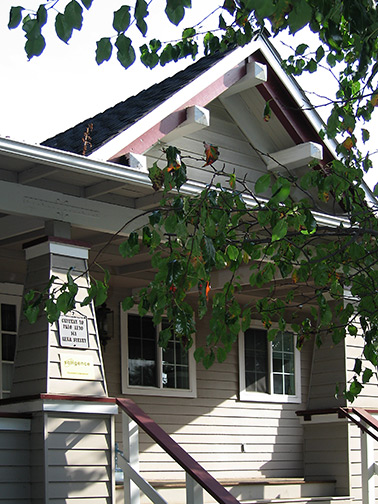
  • 141 Alma — 1919 — Craftsman
  • 119 Bryant — 1897 — Colonial Revival. Especially noteworthy. Built for the Thoits family (he was an early PA mayor and businessman).
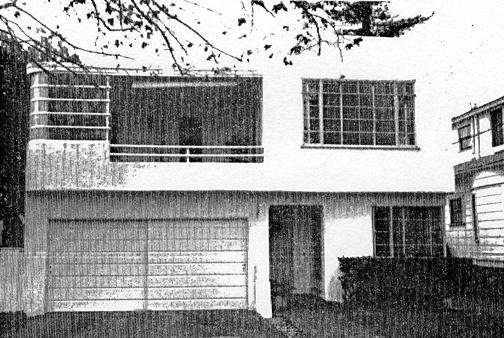
  • 215 Bryant — 1939 — Streamline Moderne
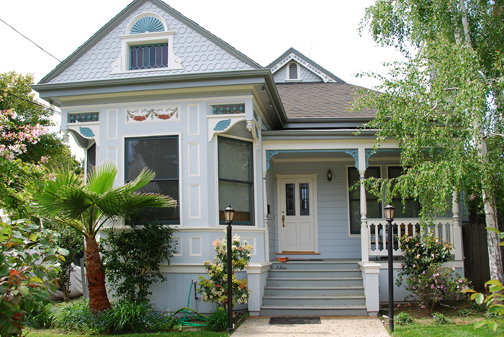
  • 228 Byron — 1896 — Queen Anne Cottage Especially noteworthy. Moved from Ramona Street, near Hamilton, in 1923.
  • 209 Cowper — 1905 — Colonial Revival
  • 215 Cowper — 1905 — Colonial Revival
  • 223 Cowper — 1905 — Classical Revival
  • 321 Cowper — 1903 — Colonial Revival Twin to:
  • 327 Cowper — 1903 — Colonial Revival
  • 225 Emerson — 1893 — Queen Anne Cottage Especially noteworthy.
  • 560 Everett — 1936 — Streamline Moderne
  • 657 Everett — 1908 — Colonial Revival
  • 381 Hawthorne — 1903 — Prairie School
  • 249 Kipling — 1903 — Colonial Revival
  • 321 Kipling — 1891 — Simple Box Palo Alto's first Post Office. Moved to this site in 1896.
  • 667 Lytton — 1903 — Colonial Revival
  • 347 Ramona — 1893 — Queen Anne
  • 466 Ruthven — 1907 — Classical Revival
  • 181 Tasso — 1905 — Colonial Revival
  • 121 Waverley — 1913 — Classical Revival Exterior recently restored to original appearance.


  1988  l   1989  l   1990  l   1991  l   1992  l   1993  l   1994  l   1995  l   1996  l   1997  l  1998  l   1999  l   2000  l   2001  l   2002  l   2003  l   2004  l   2005  l   2006  l   2007  l   2008  l   2009  l   2010  l  


Houses and links to the tours they were on:

  1988  l   1989  l   1990  l   1991  l   1992  l   1993  l   1994  l   1995  l   1996  l   1997  l   1998  l   1999  l   2000  l   2001  l   2002  l   2003  l   2004  l   2005  l   2006  l   2007  l   2008  l   2009  l   2010  l   2011  l  

Top


About PAST l Centennial Houses l Preservation Awards l  Advocacy  l Inventory l  Holiday House Tour l  Walking Tours l  Resources l  Newsletters l  Contact PAST l  Home l

E-mail us at either webmaster@pastheritage.org or president@pastheritage.org.

Dedicated to the preservation of Palo Alto's historic buildings.

PAST Logo

Copyright © 2012 Palo Alto Stanford Heritage. All rights reserved.