 Palo Alto Stanford Heritage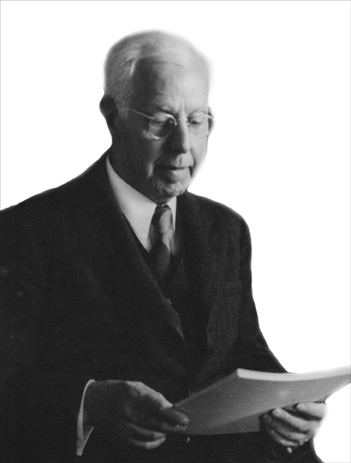
Charles Kaiser Sumner designed more than fifty local residences in Palo Alto between 1916 and 1941. While his commissions included the occasional office building, school, church, and country club, these residential buildings are typical of his work, the bulk of which was stylish housing for the comfortable middle classes. His clients were business people and professionals, as well as academics; he built an additional twenty residences on the Stanford Campus.
Born Charles Sumner Kaiser in Wilkes–Barre, PA, in 1874, he reversed the order of his middle and last names during World War I. He graduated from the Columbia University School of Architecture and traveled to Europe and the Middle East on a Perkins traveling fellowship. He began his working life in New York City in the firm of McKim, Mead, and White, working under Charles Follen McKim, whom he greatly respected and admired for his talent and hard work. Sumner would have been working at that office during its heyday, when it carried out some of its most fabulous metropolitan commissions.
After a visit to the West Coast in 1906, he moved to Berkeley where he lived and practiced for ten years. Sumner built around fifteen houses in Berkeley, as well as the Claremont Club, taking shares in the club in lieu of a design fee. He designed several buildings in Sacramento as well, including several large residences and the multi–story Farmers & Merchants Bank. Sumner moved to Palo Alto in 1916. He lived on University Avenue, and established a practice in San Francisco.
Sumner worked squarely within the Eclectic movement, and mastered the details of many styles. He preferred the English Cottage, Tudor, and Colonial Revival models, as well as the occasional Beaux–Arts/Mediterranean Revival structure. After the Spanish Eclectic style swept into town in the mid–1920’s, he built more and more in this style.
Sumner’s residences reflect a certain formality, with distinct separations between public and private space, and between spaces for the servants and the served. His are houses for entertaining, with reception hall, generous dining room and living room forming the typical ground floor arrangement. There is almost always room for a piano, and indeed Sumner was asked on more than one occasion to design a stand–alone music room addition. Stairs are positioned for privacy, either perpendicular to the view from the front door or tucked away into a niche to prevent a direct line of sight to the family spaces on the second floor.
While Sumner was suspicious of the Modern movement, implying that the house as a “machine for living” lacked “cheer and comfort,” he applauded its ideals of functionality, and approved of function’s expression in interior design. Sumner generally provided built-in storage such as cupboards and closets as part of the composition of the interior spaces, as well as multiple bathrooms. His master bedrooms often had dressing areas with built-in dressing tables positioned to take advantage of light from a well–placed window, along with clothing storage. Sumner’s kitchens were servant spaces, as was typical for the period in which he worked. While there was often a butler’s pantry, his kitchens are usually small and utilitarian.
Sumner believed that house, garden, and interior furnishings had to work together, and that their design was a collaborative effort. He speaks respectfully of the landscape architect who brings his own “scale of spaces and proportions, his own tools and materials,” and warns the architect of the dangers of leaving “obstructions” in the way of the landscape architect. Sumner is more suspicious of the decorator and strictly limits his work: while the architect designs the “interior architecture of walls and ceilings, cabinets, fireplaces, and staircases,” the decorator’s province is “color, rugs, furnishings, and hangings.” If the architect is “the executive in charge,” a collaborative approach ensures that “the whole [is] made far lovelier than the sum of its parts” and the “pitfalls of disharmony” can be avoided.
The garden and its relationship to the house was an especially important element for Sumner, who believed that “it takes both house and garden to make a home.” According to one former boarder who lived with the Sumners while attending Stanford, Sumner believed that “every room had to be suitable for an elderly lady to live in, with windows on two or even three sides if possible to look out at the gardens.” He planned his own garden with great care, “each rose bush so many feet from the next...”
Sumner wished to imbue his houses with “a feeling of permanence,” meaning “reasonable, obvious strength and durability.” The job of the architect was to “constantly take the trouble” to achieve beauty. Restraint was an important element of beauty: “composure…is the groundwork upon which beauty rests.” “Composure” was for Sumner the object of “composition”; “the process of composing and quieting a house’s various parts, so that they appear happy and at peace together.” The chief among the architect’s tools for composition—including balance, scale, and symmetry—was proportion, the “magic key to beauty” in home design.
In addition to his residential work, Sumner designed Walter Hays School Sumner portion demolished), the Los Altos Golf and Country Club, the Butte County Courthouse in Oroville, and the Rangers’ Club for the National Park Service in Yosemite. He designed the Palo Alto College Terrace Library, where WPA labor was employed in its construction.
Sumner was active in Palo Alto civic life. He served on the Palo Alto Planning Commission, and was one of the earliest backers of the University Avenue underpass. He and his wife, Alice, a watercolorist, were members of the Palo Alto Art Club (now the Pacific Art League). Through this club, he would have known Pedro de Lemos, A.B. Clark, and Birge Clark.
He died at the age of 74 in Palo Alto after a long illness on May 25, l948. Survivors included his wife, six children and five brothers.
| Sources:
Websites: |
Reprinted from the 2007 PAST Holiday House Tour booklet.
Palo Alto Residences and Other Buildings
- 2277 Bryant Street (1930)
- 215 Coleridge Avenue (1922) — Mediterranean
- 435 Coleridge Avenue (1925) — Spanish Colonial Revival
- 434 Columbia Street (1934)
- 435 Columbia Street (1934)
- 1620 Cowper Street (1931)
- 1209 Dana Avenue (1934)
- 530 East Crescent Drive (1926)
- 541 East Crescent Drive (1928)
- 548 East Crescent Drive (1928)
- 1880 Fulton Street (1930)
- 855 Hamilton Avenue (1916)
- 865 Hamilton Avenue (1916)
- 1400 Hamilton Avenue (1934)
- 1412 Hamilton Avenue (1932)
- 1436 Hamilton Avenue (1933)
- 1468 Hamilton Avenue (1941)
- 334 Homer Avenue (1935) Demolished
- 451 Lincoln Avenue (1924) — Spanish Colonial Revival
- 528 Lincoln Avenue (1933)
- 1140 Lincoln Avenue (1934)
- 1370 Lincoln Avenue (1927)— Spanish Colonial Revival
- 249 Lowell Avenue (1916)
- 445 Lowell Avenue (1917)
- 535 Lowell Avenue (1926) — Tudor
- 650 Lowell Avenue (1934)
- 441 Maple Street (1926) — more
- 1275 Middlefield (1928) — Trinity Lutheran Church, Spanish Colonial Revival; moved here from Hamilton and Byron in 1953
- 1630 Middlefield Road (1932)
- 1875 Middlefield Road (1930)
- 2171 Middlefield Road (1939)
- 430 Nevada Avenue (1935)
- 470 Nevada Avenue (1936) — Transitional
- 1184 Palo Alto Avenue (1931/1935)— Spanish Colonial Revival — more
- 263 Santa Rita Avenue (1928)
- 330 Santa Rita Avenue (1936) — Tudor
- 419 Santa Rita Avenue (1930)
- 490 Santa Rita Avenue (1929) Demolished 2012
- 2412 South Court (1930) — Spanish Colonial Revival
- 165 Southwood Drive (1933)
- 555 Stanford Avenue (1938)
- 2002 Tasso Street (1933)
- 757 Tennyson Avenue (1940)
- 1420 University Avenue (1936)
- 1505 University Avenue (1926) — Spanish Colonial Revival — more
- 546 Washington Avenue (1926)
- 2203 Waverley Street (1933)
- 2365 Waverley, Street (1937)
- 1431 Webster Street (1920)
- 2300 Wellesley (1936) — College Terrace Library, Spanish Colonial Revival — more
- 611 Alvarado (1908) — bungalow
- 668 Alvarado (1936)
- 676 Alvarado (1936)
- 694 Alvarado (1928) — Tudor
- 705 Alvarado (1937)
- 762 Dolores(1929) — Spanish Colonial Revival
- 421 El Escarpado (1927) — Tudor
- 430 El Escarpado (1927) — Tudor
- 445 El Escarpado (1927)— Tudor
- 450 El Escarpado (1927) — Tudor
- 433 Gerona Road (1935)
- 440 Gerona Road (1928)
- 536 Gerona Road (1929) — Tudor
- 562 Gerona Road (1926) — Tudor with fanciful stone tower entrance
- 576 Gerona Road (1923) — Dutch Colonial
- 593 Gerona Road (1926) — Tudor
- 571 Junipero Serra (1928) — Spanish Colonial Revival
- 586 Junipero Serra (1928) — Spanish Colonial Revival
- 632 Junipero Serra (1929) — Spanish Colonial Revival
- 676 Mayfield (1926) — Spanish Colonial Revival
- 662 Mirada (1917)
- 635 Salvatierra (1926) — Cape Cod Colonial Revival
- 659 Salvatierra (1928)
- 660 Salvatierra (1929) — Cape Cod Colonial Revival
- 690 Salvatierra (1939)
- 707 Salvatierra (1927)
- 708 Salvatierra (1929)
- 711 Salvatierra (1935)
- 712 Salvatierra (1920)
- 715 Salvatierra (1929)
- 730 Santa Maria(1929)
- 792 Santa Maria (1927)
- 241 Santa Teresa (1940)
- 746 Santa Ynez(1917) — Mediterranean

E-mail us at either webmaster@pastheritage.org or president@pastheritage.org.
Palo Alto Stanford Heritage—Dedicated to the preservation of Palo Alto's historic buildings.
Copyright © 2015 Palo Alto Stanford Heritage. All rights reserved.
)
)
)
)
)
)
)
)
)
)
)
)
)
)
)
)
)
)
)
)
)
)
)
)
)
)
)
)
)
)
)
)